What Envy Brain Support Actually Is (And What It Is Not)
The label reads like a solid nootropic stack until you run the doses against the clinical literature and realize three of the five headline ingredients are sub-threshold fillers. That’s the whole review, honestly, but let me walk you through exactly why.
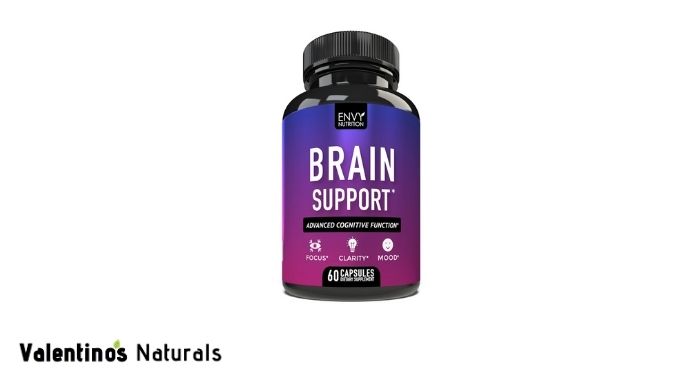
Envy Brain Support is sold by Envy Nutrition LLC, and I want to be precise about what that means. This is not a company with a research team tweaking extraction ratios or commissioning pilot trials. Envy Nutrition is a mass-market supplement brand that sells protein powders, fat burners, sleep aids, and happens to have a brain formula in the lineup. That matters. A lot of first-time buyers find this on Amazon and treat it like a boutique nootropic company that made one specific product. Not even close. Almost certainly working from a contract manufacturer’s default “brain support” template, which means the formulation choices were probably inherited rather than designed.
60 capsules per bottle, two capsules per serving, so you’re getting a 30-day supply. List price on Amazon as of 2024 is $29.99. Envy competes in what I’d call the cognitive maintenance category, not acute performance enhancement. There’s a meaningful difference. Cognitive maintenance products are designed for slow, cumulative improvement over weeks. Acute performance products are the pre-workout-for-your-brain style, usually with racetams or high-dose choline. Envy is firmly in the first camp. Nothing on the label or in the marketing communicates this, so you end up with a lot of annoyed buyers two weeks in.
No published R&D. No clinical backing for their specific formula. No branded ingredient forms. I’ll get into all of that. Just know going in that you’re evaluating a product built from commodity inputs with a clean label, not a precision supplement from a team that spent three years on formulation.
Full Ingredient Label With Doses — The Numbers That Matter
Most reviews skip this section entirely. They list the ingredients, say something like “contains Ginkgo Biloba and Bacopa Monnieri,” and call it a day. Tells you almost nothing. What matters is whether the dose in the capsule matches the dose that did something in a published trial.
Here’s what’s in two capsules of Envy Brain Support, and here’s what I found when I looked up each one:
Bacopa Monnieri comes in at 300mg per serving. Clinical research on Bacopa has used doses in the 300–450mg range, so 300mg sits right at the floor of what’s been studied. Borderline. Not impressive, but not embarrassing either. I’ll come back to this one.
Phosphatidylserine is at 100mg per serving. Minimum threshold from the research literature is right around 100mg/day, so this one technically meets the floor. Barely, but it does.
Ginkgo Biloba is where I started getting genuinely irritated. 50mg per serving. Every positive cognitive trial I’ve seen on Ginkgo used 120–240mg daily. Fifty milligrams is underdosed by somewhere between 58 and 79 percent depending on which study you’re using as your benchmark. Not a rounding error. At 50mg, Ginkgo is a label decoration. You are paying for the name printed on the bottle, not for anything that compound can actually do at that concentration. Most reviews see “contains Ginkgo Biloba” and mark it as a positive. Calling that a win is like seeing “contains protein” on a product with 1 gram per serving and labeling it a protein supplement.
DMAE is listed at 50mg. About DMAE: there’s no well-established clinical dose because the evidence base is genuinely weak. Studies exist, they’re not great, and the side effect profile at higher doses is real enough to pay attention to (more on that in section six). At 50mg it’s not going to help you and it’s not obviously going to hurt you, but it’s also not pulling any cognitive weight. Cheap, sounds sciency on a label. That’s why it’s there.
Glutamine at 150mg is the one that really gets me. Glutamine is an amino acid with legitimate uses, mostly in gut health and immune function, occasionally studied in the context of exercise recovery. Not a primary cognitive ingredient at any dose, let alone 150mg. Presence here suggests whoever built this formula was padding the label. Can’t think of another explanation.
So of five headline ingredients, two are at or near evidence-backed doses, one is at a fraction of a useful dose, and two are essentially filler. That’s the formula.

The Two Ingredients That Actually Pull Weight Here
Bacopa and Phosphatidylserine are doing the real work. Everything else is noise.
Bacopa Monnieri at 300mg has actual support behind it for memory consolidation and learning — specifically, it seems to improve the rate at which new information gets encoded. Mechanism involves bacosides (the active compounds) acting on synaptic plasticity and possibly reducing oxidative stress in hippocampal tissue. I’m simplifying, but that’s the gist. What the research is extremely consistent on is the timeline. You’re not feeling anything from Bacopa in week one or week two. Meaningful trials showing memory improvement run for a minimum of four to six weeks of daily dosing. Not a quirk of the research design. Just how the compound works.
Before I ever bought a stack containing Bacopa, I ran a standalone four-week trial (Nutricost, 300mg, nothing else changed) and I’ll be honest, week two I was ready to call it a waste. By week five I noticed I was retaining names and small details from conversations better than I had been. Could have been placebo. Kept dosing. Still there at eight weeks. That’s my experience. Individual results are going to vary and I’m not a clinician.
Phosphatidylserine at 100mg has more acute-feeling support. A 1991 randomized controlled trial by Crook et al. found statistically significant memory improvement over six weeks at 100mg/day in older adults. Real trial, not a cherry-picked supplement industry study. PS is a structural component of neuronal membranes, and supplementing it is thought to help maintain membrane fluidity. One of the more intellectually honest nootropic ingredients you’ll find in a mass-market product.
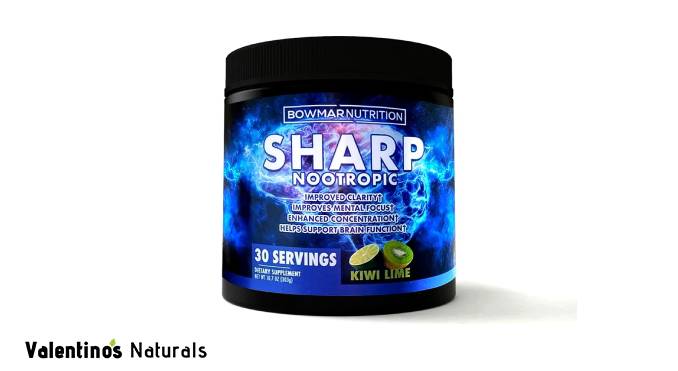
My one complaint about how Envy sourced both of these: commodity extracts. No branded forms. Bacopa is not Synapsa (used in a lot of the better clinical trials), and Phosphatidylserine is not Sharp-PS or any other standardized trademarked form. Doesn’t make them useless, but you’re getting the cheapest version of each ingredient, and standardization percentages aren’t disclosed. No way to know if Bacopa is standardized to 20% bacosides or 45%.
Strip out Glutamine, DMAE, and underdosed Ginkgo, and what you have left is a simple Bacopa plus PS supplement. Fine product, actually. Modest but honest. Problem is those other three ingredients cost the manufacturer money, dilute the formula budget, and give users nothing.
Price Benchmarked Against Four Direct Competitors
Most reviews compare Envy against its own bulk discount tiers. Not a value analysis. Here’s an actual comparison against what else your money buys in the same Amazon price neighborhood.
Envy Brain Support runs $29.99 for 30 servings. One dollar per serving. Now here’s the field:
Nature’s Bounty Brain HP is $19.99 for 30 servings, so $0.67 per serving. Comparable formula to Envy’s, arguably similar in its weaknesses. Going mass-market brain supplement with this general ingredient profile? Nature’s Bounty is cheaper for essentially the same thing. Don’t love either of them, but at least the math is honest there.
Genius Consciousness is $37.99 for 20 servings, coming out to $1.90 per serving. More expensive per serving, but the formula includes 1,000mg Lion’s Mane and Alpha-GPC at 300mg. Genuinely stronger evidence bases than anything in Envy’s formula, and dosed properly. You’re paying more per serving for more actual ingredient activity.
Only want Bacopa? Nutricost’s standalone 300mg capsules are $14.99 for 60 servings. That’s $0.25 per serving for the specific ingredient that’s doing the real work here. Bought four bottles of this. Boring, works slowly, costs a quarter a day.
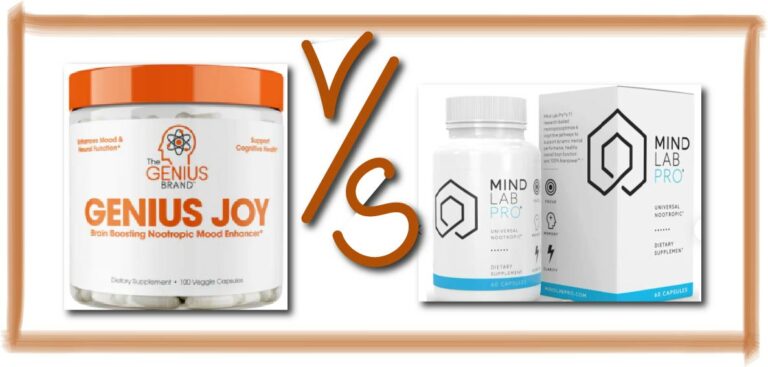
Mind Lab Pro is the high end of this category at $69.00 for 30 servings, $2.30 per serving. Big jump. But Mind Lab Pro runs 11 ingredients at or near clinical doses, uses branded forms (Synapsa Bacopa, Sharp-PS, Cognizin Citicoline), and publishes the evidence for each inclusion. You’re paying for actual formulation work. Whether it’s worth $2.30 a day is a different question, but the price-to-quality relationship is at least coherent.
At $1.00 per serving, Envy is priced above its ingredient quality tier. Not a premium product at a mid-range price. Mid-range product priced mid-range because the packaging is clean and the Amazon listing is well-optimized. That’s what you’re paying for.

Where This Goes Wrong in Practice: Real User Failure Patterns
As of when I checked, the Amazon listing shows 847 ratings with 58% five-star and 22% one-star. Bimodal distribution like that is not a mystery and it is not random noise. Maps almost perfectly onto two types of buyers.
Five-star reviewers are mostly people who started taking it, weren’t expecting anything specific, and after six or eight weeks noticed they felt a bit sharper. Crediting the whole product when what probably happened is Bacopa did its slow thing and they noticed. Good for them. Real result.
One-star reviewers are almost uniformly “took it for two weeks and felt nothing.” Spent an evening reading through probably forty of those reviews while procrastinating on something else, and the pattern is consistent. Two weeks, no effect, feels scammed. And honestly, that failure is completely predictable from the pharmacology. Bacopa does not work in two weeks. Documented. Marketing creates an expectation the timeline cannot meet, and users blame the formula rather than the mismatch between expectation and mechanism.
Dismissing those one-star reviews as placebo non-responders is lazy. Some of them probably are. But a lot of them are people who bought a product marketed with before-and-after brain imagery, expected something to shift in week two, and got nothing because that’s not how the active ingredient in this formula operates.
A third failure pattern shows up in smaller numbers but is worth flagging. A handful of users mention headaches and vivid, sometimes disturbing dreams. That’s DMAE. Documented to cause sleep disruption and irritability in a subset of users, typically at doses above 100mg. Envy’s dose is 50mg, which is close to that threshold for people who are sensitive to it. Not a huge percentage of users, but real, and not warned about on the label.
Side Effects: What the Label Does Not Warn You About
Direct disclaimer: I’m not a doctor. Nothing in this section is medical advice. But some of what I found when I looked into this formula is specific enough that “well-tolerated” as a blanket summary is genuinely irresponsible.
Start with DMAE at 50mg. Beyond the sleep and irritability issues I mentioned, DMAE is contraindicated in bipolar disorder. Documentation on this exists. Not obscure. Nothing about it on the label.
Ginkgo is the one that actually bothers me most. Ginkgo Biloba has a documented antiplatelet effect, meaning it inhibits blood clotting to some degree. This effect appears in the literature at doses as low as 40mg. Envy’s dose is 50mg, which clears that threshold. Taking aspirin daily, warfarin, or regular NSAIDs like ibuprofen? Adding Ginkgo to your routine creates a real interaction risk. Increased bleeding time, bruising, potential complications before surgery. Not speculation. Pharmacology literature on this is solid, and it’s exactly why responsible supplement companies put antiplatelet warnings on products containing Ginkgo at any dose.
Envy’s label has no such warning. Not a minor omission. That silence is a problem, and I don’t care how clean the capsule design looks.
Bacopa’s side effect profile is the most manageable of the bunch. About 15% of subjects in clinical trials reported GI discomfort, specifically nausea and cramping. Dose-related and almost always mitigated by taking it with food. Not a dealbreaker, just take it with breakfast.
Glutamine and Phosphatidylserine are low-risk at these doses for most people. No major caveats there.
Cumulative picture: mostly benign, but the Ginkgo-blood thinner interaction is real, the DMAE sleep disruption is real for a subset of users, and the lack of warnings is a genuine transparency failure.

Who Should Buy This and Who Should Not — A Direct Answer
A specific person exists for whom Envy Brain Support is a reasonable buy. First-time nootropic user, wants an entry-level Bacopa and Phosphatidylserine supplement, doesn’t want to build their own stack, and has a sub-$1-per-day budget. If that’s you, and you understand you’re waiting six weeks before evaluating whether anything is working, and you’re not on blood thinners, this is a passable starting point. Genuinely the use case.
But look at who Envy actually markets this product to. Imagery skews 25–35, productivity-focused, person-at-a-laptop energy. That demographic is almost always expecting something acute. Focus within an hour. Mental clarity by Tuesday. Not this product. Properly dosed ingredients here are maintenance-and-memory compounds with multi-week onboarding. Marketing is selling a cognitive sports car and the formula is delivering a slow reliable sedan. Nothing wrong with the sedan if that’s what you needed.
Three situations where you should skip this entirely: anyone expecting to notice anything in the first two weeks (you won’t, and you’ll waste $30 convincing yourself nootropics don’t work); anyone taking a daily blood thinner, aspirin, or regular NSAIDs (Ginkgo interaction is documented and the label doesn’t warn you); anyone with a $40 budget. Spend $34–38 in that range and you can get something with Lion’s Mane at 500mg or more, properly extracted, alongside a decent Bacopa. Formulas like that exist. Not hard to find. Ten dollars difference matters here in a way it doesn’t in most supplement categories.
Narrow case where this is genuinely appropriate, a 50-something looking for a low-cost Bacopa and PS maintenance supplement with no other medications in the picture, basically never shows up in the marketing. People most likely to get a real benefit from this formula aren’t who Envy is selling to.
Final Verdict: Score, Recommendation, and the One Change That Would Fix It
Numbers first, since that’s usually what people scroll down to find.
Formula quality: 5/10. Two ingredients at or near clinical threshold, three that are sub-threshold or have weak evidence behind them regardless of dose. Foundation is real but the surrounding structure is mostly decorative.
Value: 5/10. Market-rate pricing for a below-market formulation. The $0.33 premium over Nature’s Bounty Brain HP isn’t buying you anything. The $0.75 deficit versus Genius Consciousness is buying you significantly more.
Transparency: 4/10. No branded ingredient forms, no standardization disclosures, no clinical citations anywhere in the product materials, and no antiplatelet warning for a product containing Ginkgo at a dose documented to produce antiplatelet effects. That last one drags this number down hard.
Side effect profile: 7/10. Mostly benign. Bacopa’s GI issue is manageable. DMAE’s sleep disruption affects a minority of users. Ginkgo caveat is real but applies to a subset of buyers. For someone with no relevant medications and no bipolar history, actual daily risk is low. Score would be higher if the label acknowledged any of this.
Overall: skip it for most buyers. Not because it’s dangerous, but because the math doesn’t work. A dollar a day for two ingredients that do something and three that don’t is a bad trade when alternatives are priced within five dollars of it.
One change that would make this product competitive: replace Glutamine and DMAE with Lion’s Mane at 500mg Hericium erinaceus extract. Lion’s Mane has accumulating evidence for nerve growth factor support and has become essentially a baseline expectation in the current nootropic market. At commodity pricing, that reformulation would cost the manufacturer under $0.15 more per serving. Not a significant production hurdle. Just a decision that hasn’t been made.
Envy’s stack reads like a 2019-era formula. Nootropics have moved toward Lion’s Mane and Citicoline as baseline inclusions in anything that wants to be taken seriously, and this product hasn’t moved with the field. Competing reviews call it “a solid option for the price” without ever defining what price-to-quality benchmark they’re using. My benchmark: what does $30 buy you in this category right now, and does this formula beat the field or lag it? Lags it. Modestly, not catastrophically, but enough that I can’t call it a solid option without telling you what you’re passing up five dollars away.