As an Amazon Associate I earn from qualifying purchases. This post contains affiliate links. If you buy through them we may earn a commission at no extra cost to you.
Product prices and availability are accurate as of the date and time indicated and are subject to change. Any price and availability information displayed on Amazon at the time of purchase will apply to the purchase of this product. Certain content that appears on this site comes from Amazon. This content is provided "as is" and is subject to change or removal at any time.
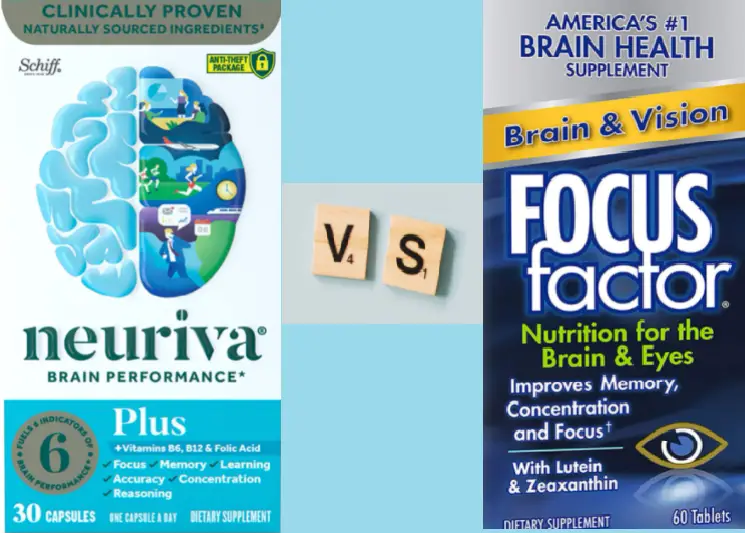
Short answer: they’re not really rivals. Focus Factor Original is a multivitamin with a 640 mg proprietary blend, and the current label doesn’t contain any ginkgo at all. Ginkgo biloba is one herb with a huge independent trial behind it that came back negative for preventing dementia. If you’re a healthy adult chasing better memory, Focus Factor has the more relevant study, but it’s the company’s own. If you’re on a blood thinner, skip ginkgo. If you’re pregnant or could be, skip both.
I wrote the first version of this comparison in 2021. Both products have moved on since then, and so has the research, so I pulled the current Focus Factor label from its maker’s site and re-read the big ginkgo trials. A heads-up, folks: I’m not a doctor, and nothing here replaces one. I just read labels and studies very carefully.
In this article, I’ll explain:
- What’s actually in Focus Factor Original today (and what isn’t)
- What the biggest ginkgo study found, and what dose it used
- What Focus Factor’s own clinical study really showed
- The safety flags for each, including one most reviews miss
- Which one I’d pick, and for whom
Focus Factor Original: what’s on the label now
Focus Factor is made by Synergy CHC, and the Original formula is sold as “Nutrition for the Brain.” The serving is 4 tablets a day with food. The maker says you can take more, up to a maximum of 8 tablets a day, to account for body weight, activity, stress or diet.
Most of the label is a regular multivitamin. A few of the numbers worth knowing, per 4 tablets:
- Vitamin B6: 15 mg (882% of the Daily Value)
- Vitamin B12: 20 mcg
- Folate: 665 mcg DFE (400 mcg as folic acid)
- Vitamin D: 2.5 mcg (only 13% of the Daily Value)
- Choline: 30 mg
- Magnesium: 100 mg
Then comes a 640 mg “synergistic and proprietary formulation.” That’s where the brain ingredients live: DMAE, L-glutamine, Bacopin bacopa, phosphatidylserine, DHA from fish oil, N-acetyl tyrosine, bilberry, GABA, grape seed and grape skin extracts, vinpocetine, huperzine A and a few minerals. No individual amounts are given. That’s a proprietary blend, and it means you can’t check a single one of those brain ingredients against the dose the studies used.
Notice what’s missing? Turns out, it’s ginkgo. My 2021 version listed it as a Focus Factor ingredient. It’s not on the Original label today.
Focus Factor’s own store listed both the 90- and the 150-tablet bottle at $29.99 when I checked in October 2026. At 4 tablets a day, the 150-count lasts 37.5 days, so that’s roughly 80 cents a day.
- Vitamin B615 mg882% DV. Over Europe's 12 mg daily limit
- Vitamin B1220 mcgWell above the Daily Value
- Folate665 mcg DFE400 mcg as folic acid
- Vitamin D2.5 mcgOnly 13% of the Daily Value
- Choline30 mgA small amount
- Magnesium100 mgA useful top-up
- Proprietary blend640 mgBacopa, DMAE, phosphatidylserine, vinpocetine, huperzine A and more, amounts hidden
Label: Focus Factor Original supplement facts, focusfactor.com (October 2026)
Ginkgo biloba: one herb, one very big trial
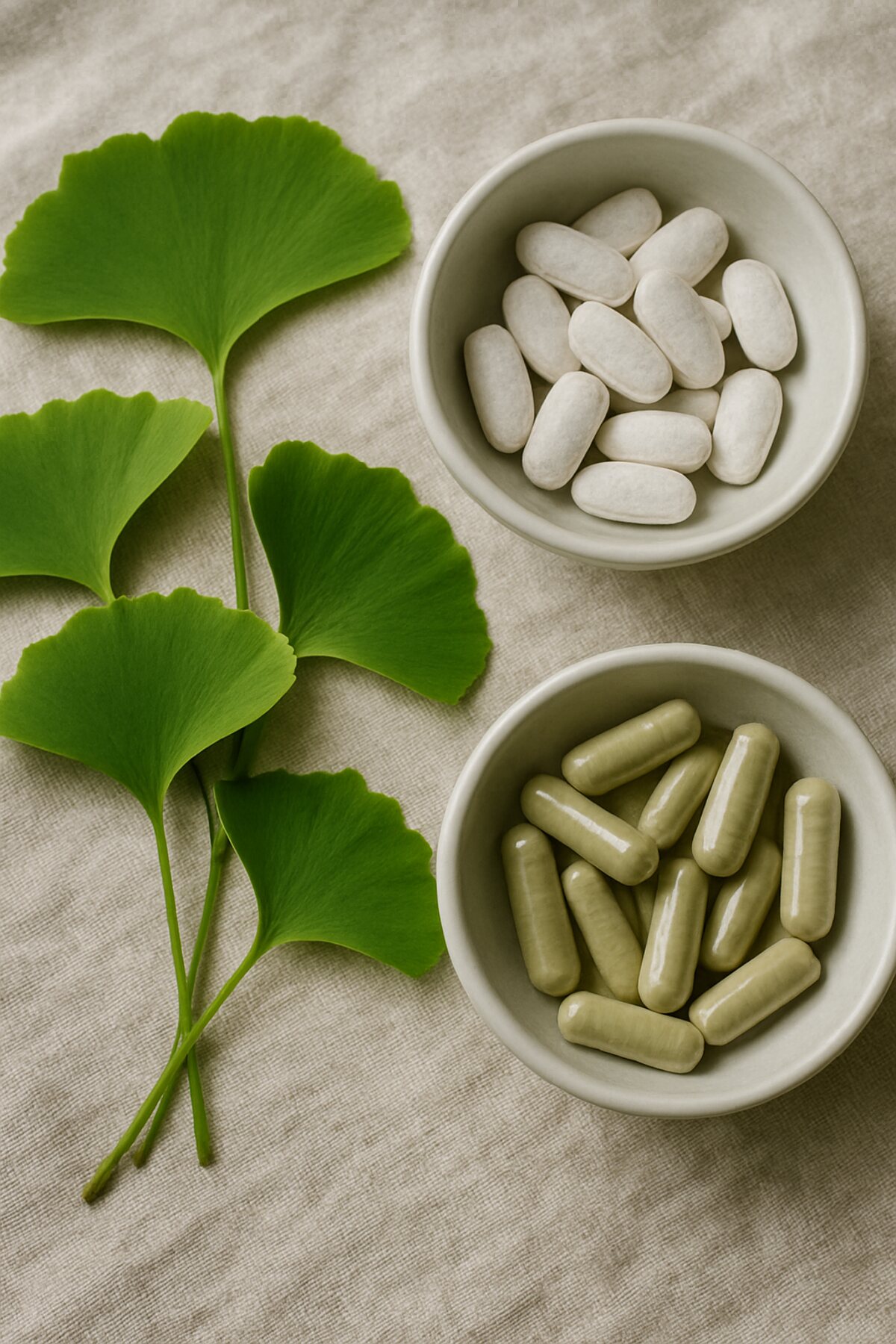
Ginkgo extract comes from the leaves of the ginkgo tree. It’s been sold for memory for decades. And it got the kind of test most supplements never get.

The Ginkgo Evaluation of Memory (GEM) study, published in JAMA in 2008, gave 3,069 people aged 75 or older either 120 mg of ginkgo extract twice a day or a placebo. They were followed for a median of 6.1 years. Ginkgo didn’t lower the rate of dementia or Alzheimer’s disease. The NIH’s complementary health center sums it up bluntly: there’s no conclusive evidence that ginkgo helps any health condition, and it’s uncertain whether it changes cognitive performance in healthy people.
So if you’ve seen ginkgo sold as a memory fix, that’s the backdrop. It’s not proven to do nothing for everyone. It just failed the biggest test it ever took.
On dose: the GEM trial used 240 mg a day, split in two. Capsule sizes vary (the Nature’s Bounty one further down is 120 mg), so read the label before you assume you’re getting a “studied” amount.
READ: Prevagen vs Ginkgo Biloba
What Focus Factor’s clinical study actually showed
Focus Factor sells this as its “Clinically Tested Original Formula,” and there is a real trial behind that. The study summary is public, and I read the whole thing so you don’t have to.
Here’s the setup. In 2011, a contract research company ran a six-week, double-blind, placebo-controlled trial for Factor Nutrition Labs, the company selling Focus Factor at the time. 96 healthy adults aged 18 to 65 took 4 tablets a day or a look-alike placebo, and 89 of them were in the final analysis. The main test was a word-list memory task.
The result: after six weeks, the Focus Factor group remembered an average of 51.9 words across five trials, against 49.7 for placebo. That’s a difference of about 2 words. The report calls that “comparable to a decrease of 20 years in cognitive aging.” Honestly, I’d call it a small effect from one company-funded study at one site. Some of the computer tests, like reaction time, delayed recall and vigilance, showed no difference at all.
Two more details from that report. Headaches were more common on Focus Factor (14.9% vs 8.2% on placebo). And the study is from 2011, so it tested the formula as it was then, not necessarily the bottle on the shelf today.
Still, credit where it’s due: that’s a randomized trial in healthy adults. Ginkgo’s big trial was about preventing dementia in people 75 or older, which is a different question.
FOCUSfactor Clinical Study Report Summary, Cognitive Research Corporation (2011)
Safety: the flags for each
Ginkgo. The NIH’s summary says ginkgo leaf extract is generally well tolerated in moderate amounts, with dizziness, stomach upset and headache as the usual side effects. The big one is bleeding risk if you take a blood thinner such as warfarin. It may also be unsafe in pregnancy. And never eat ginkgo seeds. The NIH notes fresh seeds are toxic, and people have had serious reactions to roasted ones too.
Focus Factor. Three things I’d flag:
- Vinpocetine. It’s in the blend. In 2019 the FDA warned that vinpocetine may cause a miscarriage or harm fetal development, and advised pregnant women and anyone who could become pregnant not to take it. I rarely see that mentioned in Focus Factor reviews.
- Vitamin B6. 15 mg per serving, or 30 mg on the 8-tablet maximum. That’s well under the US upper limit of 100 mg a day. But Europe’s food safety agency set its limit at 12 mg a day in 2023, citing nerve damage from long-term high intake. If you also take a B-complex, add up your B6.
- Huperzine A. It’s in the blend at an undisclosed dose. It acts on acetylcholine, so if you take prescription medicine, show the label to your pharmacist.
Focus Factor also contains fish and soy, which matters if you’re allergic.
You can check any label’s doses against the research with my nootropic dose checker, and see how your B6 adds up with the vitamin and mineral dose lookup.
| Focus Factor Original | Ginkgo biloba | |
|---|---|---|
| What it is | Multivitamin + 640 mg blend | One herb (leaf extract) |
| Daily dose | 4 tablets, up to 8 | 240 mg in the big trial |
| Biggest study | 2011, 96 adults, six weeks, company-funded | GEM 2008, 3,069 adults aged 75+ |
| Result | About 2 more words recalled | No drop in dementia rates (a different question) |
| Main safety flag | Vinpocetine: not in pregnancy | Bleeding risk with blood thinners |
| Can you see every dose? | No, the blend is hidden | Yes, it's one ingredient |
Bottom line: For a healthy adult who isn't pregnant, Focus Factor is the more reasonable buy. Neither made my top 3.
Which one I’d pick
If you’re a healthy adult who wants a memory supplement and you’re not pregnant, Focus Factor is the more sensible of the two. It covers your basic vitamins, it has a (small, company-funded) trial in people like you, and it’s cheap per day. I’d still prefer a formula with every dose on the label.
Ginkgo makes more sense as one ingredient in a wider plan than as a memory pill on its own. I wouldn’t buy it for memory alone, given the GEM result. And I’d skip it entirely if you take anything that thins your blood.
Whichever you try, give it a fair test. Six weeks is what Focus Factor’s study used, so don’t judge it after one. My four-week trial tracker and the free memory and attention tests let you measure before and after instead of guessing.

- #1 PHARMACIST RECOMMENDED MEMORY SUPPLEMENT BRAND: Focus Factor is the #1 Pharmacist Recommended Brand based on the results of the U.S. Pharmacy Times Survey of Pharmacists’ OTC Recommendations for “Memory Support” dietary supplement, 2025-2026.
- COMPLETE MULTIVITAMIN IMPROVES FOCUS: Focus Factor Extra Strength brain supplements contain a powerful combination of vitamins, minerals, and neuro-nutrients, that not only power your brain but can also replace your daily multivitamin
- CLINICALLY TESTED RESULTS: A clinical study showed that adults who took the original Focus Factor as directed for six weeks improved their memory, concentration and focus.
$33.76
Paid link · price checked October 24, 2026 09:24

- SUPPORTS HEALTHY BRAIN FUNCTION (1) Nature’s Bounty Ginkgo Biloba helps to maintain healthy circulation; support healthy brain function and mental alertness (1)
- FOR MEMORY SUPPORT (1) Ginkgo Biloba helps to support memory and mental alertness; perfect for occasional mild memory problems associated with aging (1)
- AN ANCIENT HERBAL INGREDIENT Ginkgo Biloba was used in China in the 15th century for its healthy properties and remains a popular herbal supplement today
$8.49 In Stock
Paid link · price checked October 24, 2026 09:24
READ: Focus Factor vs Natrol Cognium
Quick answers
Does Focus Factor contain ginkgo biloba?
Not the Original formula, based on the label on Focus Factor’s own site in October 2026.
How long does Focus Factor take to work?
Its clinical study measured results after six weeks of 4 tablets a day.
What’s a normal ginkgo dose?
The largest trial used 120 mg twice a day. Check with your doctor first if you take any medication, especially a blood thinner.
Can you take Focus Factor and ginkgo together?
There’s no study of the combination. Both affect things your doctor would want to know about (bleeding risk with ginkgo, vinpocetine and huperzine A in Focus Factor), so ask before stacking them.
Conclusion
Focus Factor and ginkgo biloba get compared a lot, but today’s Focus Factor Original doesn’t even contain ginkgo. Focus Factor is a cheap multivitamin with a hidden blend and one small company-funded study in healthy adults. Ginkgo is a single herb that failed its biggest test for dementia prevention, and its benefit for healthy memory is uncertain. For most healthy, non-pregnant adults, Focus Factor is the more reasonable buy. Neither made my top 3 list.
That would be it folks! Got a question about either one? Leave it in the comments and I’ll answer.