Short answer: read the label before you add anything, because most “stack” ideas duplicate what’s already in it. Mind Lab Pro has no creatine, no vitamin D and no omega-3, so those are the genuine gaps. If you want more bacopa or citicoline, the simplest way is to take 4 capsules instead of 2, not to buy a second product. And skip a second all-in-one nootropic. You’d lose track of every dose.
I wrote the first version of this in August 2026. Re-reading it, I’d oversold omega-3 for brainpower and written as if I’d taken it for years, which wasn’t something I could stand behind. So I’ve rebuilt it from the Mind Lab Pro label and the research, with the honest version of each recommendation. Usual reminder, folks: I’m not a doctor, and stacking supplements is exactly where a pharmacist’s advice is worth having.
Here’s what I’ll cover:
- What’s already in Mind Lab Pro, so you don’t pay twice
- The three gaps worth filling, and what the research actually says
- Why “topping up” beats adding a second product
- The stacks that are just expensive duplication
- Two combinations to run past your pharmacist
Start with what’s already in it
Per 2-capsule serving, Mind Lab Pro contains:
- Citicoline (Cognizin): 250 mg
- Bacopa monnieri (24% bacosides): 150 mg
- Organic lion’s mane mushroom: 500 mg
- Phosphatidylserine: 100 mg
- N-acetyl L-tyrosine: 175 mg
- L-theanine: 100 mg
- Rhodiola rosea: 50 mg
- Maritime pine bark extract: 75 mg
- Vitamins B6 (2.5 mg), B9 (100 mcg) and B12 (7.5 mcg)
It’s caffeine-free, and the label allows 2 to 4 capsules a day. Keep this list handy. Any time you’re tempted by a new brain supplement, check whether it’s just a smaller dose of something here.
- Citicoline (Cognizin)250 mg500 mg on 4 capsules
- Bacopa monnieri150 mg300 mg on 4 capsules
- Lion's mane mushroom500 mg
- Phosphatidylserine100 mg
- N-acetyl L-tyrosine175 mgDopamine and norepinephrine building block
- L-theanine100 mgPairs with your coffee
- Rhodiola rosea50 mgWell under the 576 mg trial dose
- Pine bark extract75 mg
- Vitamins B6, B9, B122.5 mg / 100 mcg / 7.5 mcgCount these if you also take a B-complex
Label: mindlabpro.com, October 2026
Three things it doesn’t contain
Creatine. There’s none in Mind Lab Pro, and it has more brain research behind it than most people realize. A 2018 systematic review of six randomized trials (281 healthy people) found creatine may improve short-term memory and reasoning. Vegetarians did better than meat-eaters on memory tasks, while younger people showed no change. The authors also described creatine as safe. If you want to work out an amount, my creatine dose calculator walks you through it.
Vitamin D. Not in the formula either. If you live somewhere with real winters or spend most days indoors, it’s worth getting your level tested rather than guessing. The adult upper limit is 100 mcg (4,000 IU) a day, so more isn’t automatically better. My vitamin D level ranges page explains what your blood test number means.
Omega-3. There’s no DHA or EPA in Mind Lab Pro. Here’s the honest part: the NIH says omega-3 supplements haven’t been shown to improve thinking in healthy older adults or in people with Alzheimer’s. Some observational studies link fish-rich diets to less cognitive decline, but that’s not the same as proof that a capsule helps. So I’d add omega-3 if you rarely eat fish, for general nutrition, not as a brain booster.
READ: My full write-up on creatine for the brain
Avgerinos et al. 2018, Experimental Gerontology
Topping up beats adding a second product
This is the part people get wrong most often, kinda understandably.
Say you want the bacopa effect. The best-known bacopa trial, from Swinburne University, used 300 mg a day. Mind Lab Pro has 150 mg per 2 capsules. You could buy a separate bacopa, but the simpler move is taking 4 capsules, which gets you to 300 mg with nothing new to track. (It’s a differently standardized extract from the trial’s, so treat it as a rough match.)
Same with citicoline. A 12-week Cognizin trial in older adults used 500 mg a day, which is exactly 4 capsules of Mind Lab Pro. The catch is cost: 4 capsules a day means $4.60 a day instead of $2.30, and a bottle that lasts 15 days.
Rhodiola is the odd one out. Both 2 and 4 capsules are well under the 576 mg a day used in a well-known stress-fatigue trial. If you want rhodiola’s full effect, a separate rhodiola is the only way, and then you need to count both sources. The NIH’s complementary health center says rhodiola is possibly safe for up to 12 weeks, so keep that in mind.
The rule I use: find the number on the label, compare it to the study, then decide if you’re filling a gap or doubling up. My nootropic dose checker does the comparison for you.
READ: Mind Lab Pro Dosage: How Many Capsules, When, and Why 4 Can Make Sense
The stacks that are just expensive duplication
A second all-in-one nootropic. “Complete” brain formulas often share ingredients with Mind Lab Pro, like bacopa, citicoline, tyrosine or theanine. Run two and you won’t know what dose of anything you’re getting. If you insist, add up both labels first.
A separate 250 mg citicoline. You already have 250 mg, which falls within the 250 to 500 mg range used in a Cognizin trial in teenage boys. If you want 500 mg, 4 capsules gets you there.
“Focus” products built on caffeine and theanine. Check the label. You already get 100 mg of theanine, and you can get the caffeine from coffee.
Coffee: the stack you probably already have
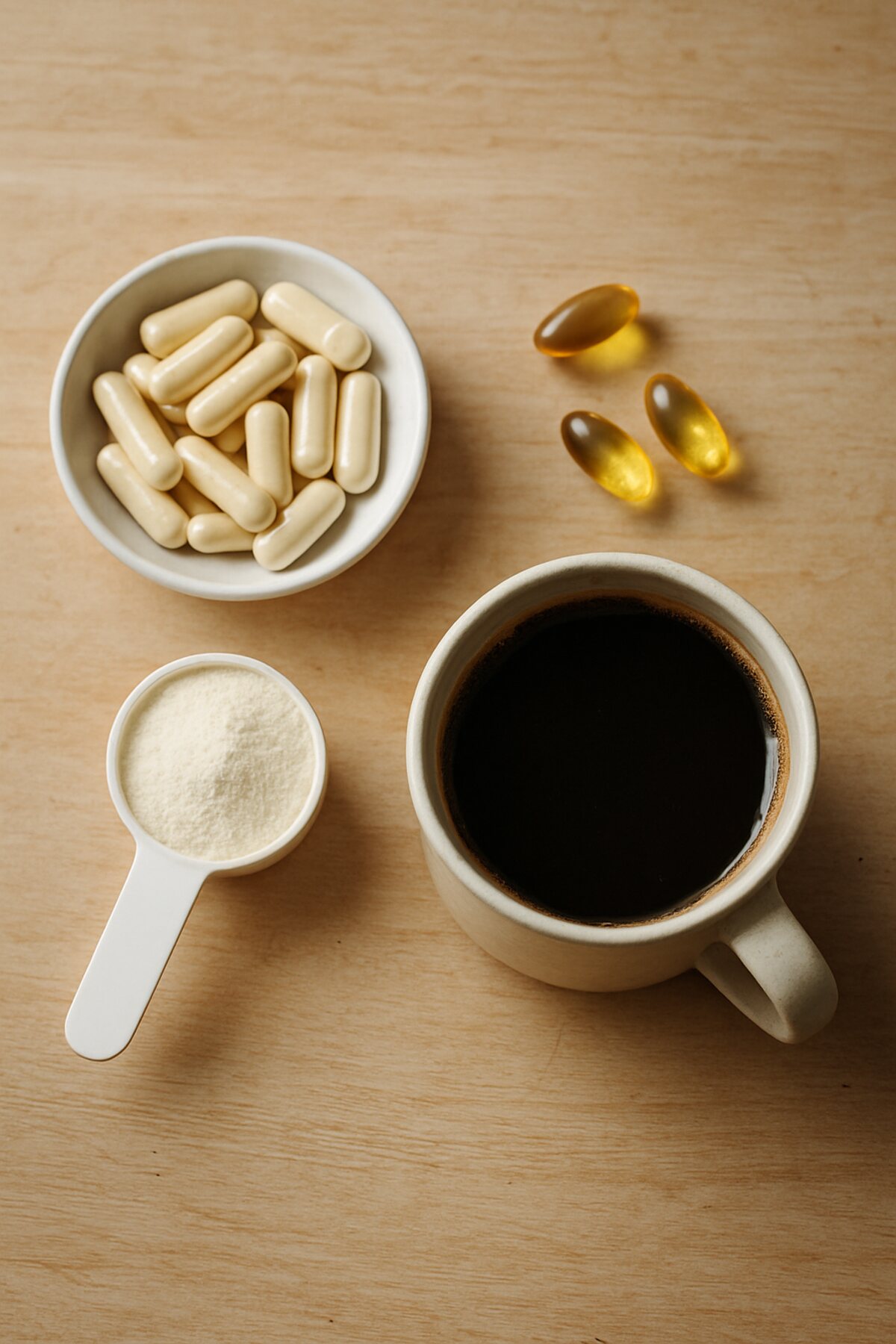
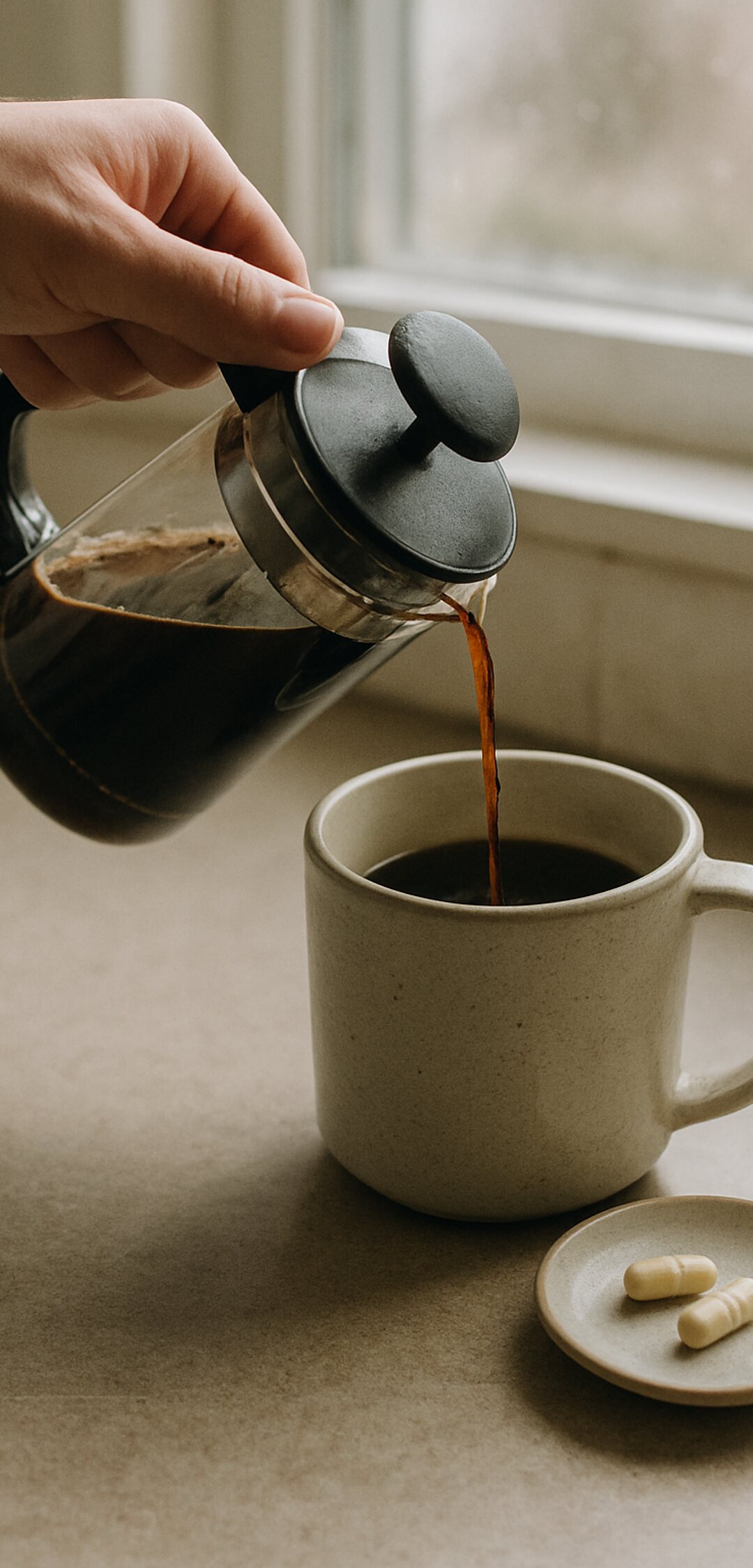
Honestly, the most useful pairing might already be in your kitchen. Mind Lab Pro is caffeine-free and has 100 mg of L-theanine. In a 2008 study, 100 mg of theanine with 50 mg of caffeine (about half a cup of coffee) improved speed and accuracy on an attention-switching task. So a morning coffee with your capsules is a sensible combination. Just keep both early in the day.
READ: Can You Take Mind Lab Pro With Coffee?
Two combinations to check with your pharmacist
Stimulants late in the day. Rhodiola can cause insomnia, according to NCCIH. Stack Mind Lab Pro with a pre-workout or several coffees and take them all late, and you may sleep badly. That’s usually a timing problem. The label says morning or early afternoon for a reason.
Medication that works on dopamine or norepinephrine. There’s 175 mg of N-acetyl L-tyrosine per serving, and tyrosine is the building block for both. If you take medication that affects either one, ask your pharmacist before adding Mind Lab Pro or extra tyrosine.
The same goes for anything prescription, and for pregnancy or breastfeeding. One phone call is cheaper than guessing.
Quick answers
Can I take Mind Lab Pro with creatine?
There’s no study of the combination, but they don’t overlap at all. A 2018 review found creatine may help short-term memory and reasoning.
Can I take Mind Lab Pro with fish oil?
Yes, there’s no overlap. Just know that the NIH says omega-3 supplements haven’t been shown to improve thinking in healthy older adults.
Can I take Mind Lab Pro with ashwagandha?
They don’t overlap, but there’s no study of the pair. The NIH says ashwagandha may help with insomnia and stress, but it can interact with thyroid and other medications and isn’t recommended for people with thyroid or autoimmune disorders. Ask your doctor first.
What’s the best nootropic stack?
For most people: one well-dosed complete formula, coffee in the morning, and filling real gaps like vitamin D or creatine. Not three formulas on top of each other.
Conclusion
Before you stack anything with Mind Lab Pro, read its label. The genuine gaps are creatine, vitamin D and omega-3, and only creatine has decent evidence for thinking. If you want more bacopa or citicoline, take 4 capsules instead of buying more products. Skip a second complete nootropic, keep stimulants early, and check with your pharmacist before mixing tyrosine with dopamine-related medication.
That would be it folks! Running a stack that works for you? Post it in the comments, with the doses.