Two Executive-Function Scores Got Worse — Here Is the Full 2025 Trial
Three grams of lion’s mane made the executive-function scores go the wrong way, and that finding is sitting inside a 2025 double-blind trial that most supplement coverage has quietly skipped. I’ve been waiting for someone else to write about it properly. Nobody has. So here we go.
The trial ran 18 healthy young adults through a crossover design using 3 g of a 10:1 fruiting-body extract, then measured cognitive outcomes at the 90-minute acute window. One thing moved in a good direction: pegboard psychomotor speed. Fine. But global cognition? Null. Mood? Null. And then Flanker task performance and Trail Making B both went the wrong way — not dramatically, not in a way you’d notice before your morning coffee, but statistically in the wrong direction.
I want to be careful here. Two worsened scores in an 18-person crossover is not a catastrophe. Small samples are noisy. But this is not a minor footnote. It’s a signal. And the signal is that dosing lion’s mane acutely in cognitively healthy young adults might just be the wrong use case entirely.
Reviewers who bury this outcome — who quote the pegboard result in a headline and say nothing about Flanker or Trail Making B — are doing you a genuine disservice. That pegboard finding does not confirm broad cognitive enhancement. One subtest at one time point in 18 people is a thread. Not a rope. Anyone selling “sharper focus in 90 minutes” off the back of this trial is working from a very creative reading of the data.
READ: My top 3 best nootropic supplements, with every dose checked
Before That Trial, the Null Results Were Already Piling Up
The 2025 crossover didn’t come out of nowhere. Null results in healthy young adults were already stacking up before it was published.
Alzheimer’s Drug Discovery Foundation tracks evidence on cognitive supplements, and their listing for lion’s mane includes a four-week trial in 41 healthy young adults where word recall came out worse than placebo. Worse. Not neutral. That’s the kind of result that, in a pharma trial, would get covered everywhere. In the supplement world it just sort of disappears.
Add that to two additional small null trials in similar cohorts and you’ve got a pattern. Three null or negative trials in healthy young adult populations. The 2025 crossover isn’t an outlier.
It fits a consistent picture the supplement industry has simply chosen not to merchandise. That’s not a science problem — science is doing its job, running trials, recording what happened, publishing results. It’s a curation problem. When a third-party evidence tracker lists the negatives and the marketing materials don’t, someone in that chain made a choice about what story to tell. And it wasn’t the researchers.
I spent a long time assuming that if something bad had been found, I’d have heard about it.
I learned, slowly and expensively, that the absence of bad press is not the same as the absence of bad data.
Mori 2009 Planted the Flag — Then Revealed a Catch
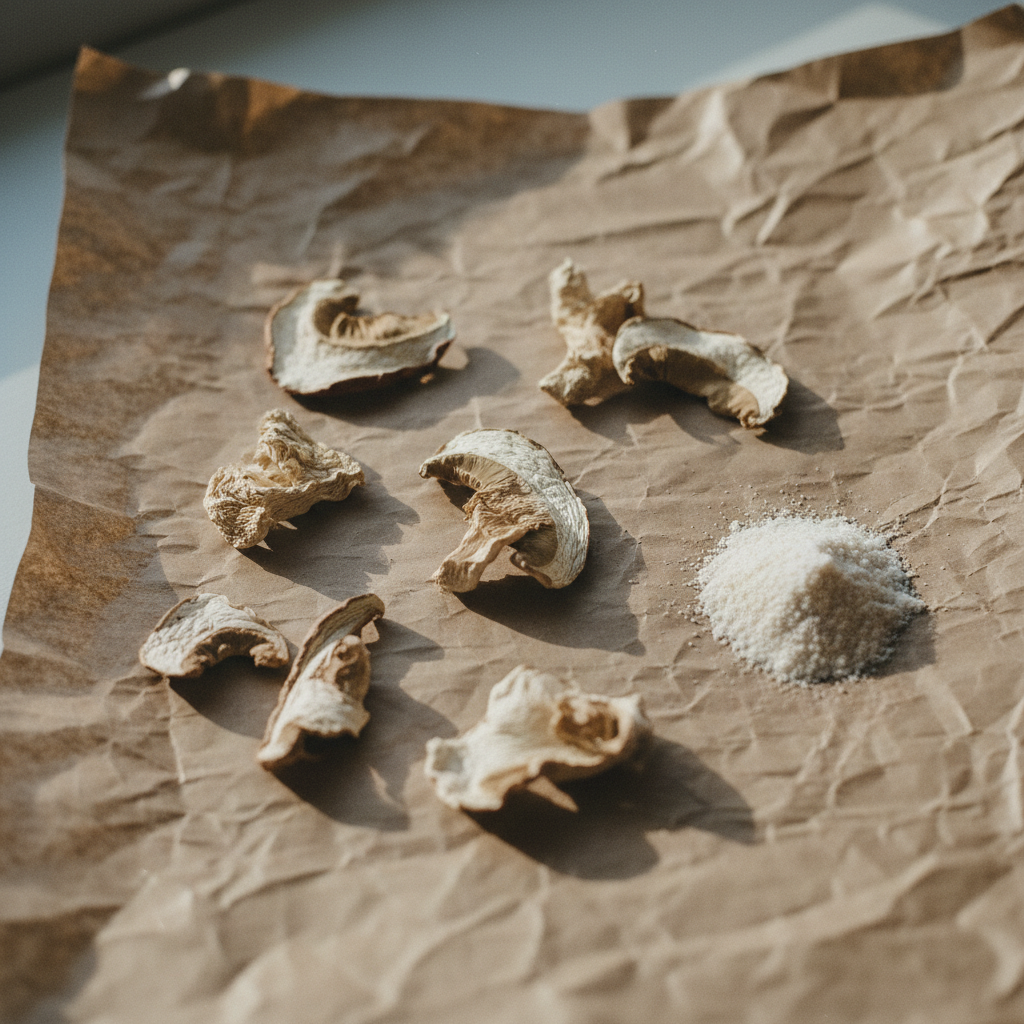
Everything traces back to Mori 2009. That trial is the reason lion’s mane is in every nootropic stack, why it has its own section on every supplement blog, why you keep seeing it. Genuinely interesting evidence.
But here’s what Mori actually studied: older adults with mild cognitive impairment, over 16 weeks of active dosing. Not healthy young people. Not an acute window. A symptomatic older population given sustained supplementation over four months. That is a very different scientific context than “take this before your study session.”
Most summaries also skip this detail: benefits faded after supplementation stopped. Participants who’d improved during the 16-week period declined again once they weren’t taking it. Not disqualifying, but it matters. It suggests whatever mechanism was operating needed to be continuously supported — not primed once and left to run.
Using Mori 2009 as evidence that lion’s mane sharpens healthy adult cognition quickly is a category error. It’s like citing a trial of blood pressure medication in hypertensive patients as proof the drug is useful for athletes. Population and mechanism don’t transfer just because the compound is the same. The industry has never really bothered to correct this, because correcting it would make the marketing harder.
| Acute use, healthy young adults | Sustained use, older adults with cognitive difficulty | |
|---|---|---|
| Dose | 3 g (10:1 extract) | 2 g daily |
| Duration | Single dose, 90-min window | 8 weeks |
| Sample size | 18 adults | 109 adults (ages 40–75) |
| Executive function | Flanker & Trail Making B worsened | Working memory improved |
| Visual attention | Null | Improved |
| Mood / sleep | Null | Positive secondary outcomes |
| Psychomotor speed | Pegboard improved | Not reported |
Bottom line: Positive signals cluster in sustained dosing for older adults already experiencing cognitive difficulty — not in acute use by healthy young adults.
April 2026 Preprint: the Most Encouraging Signal Yet, With a Real Caveat
Okay. Here is where I get genuinely interested.
A preprint posted to medRxiv in April 2026 ran 109 adults aged 40–75 with self-reported cognitive difficulty through eight weeks of 2 g daily lion’s mane supplementation. Visual attention improved. Working memory improved. Sleep and mood showed positive secondary outcomes too. Honestly, this is the most coherent result in the recent literature.
And it makes sense that it is. Look at who they recruited: middle-aged to older adults who already felt cognitively off. Not college students in peak working memory. People who were already noticing something slipping. That population matches the mechanism Mori’s earlier work gestured at — sustained dosing over weeks, not a 90-minute acute window. Everything is different from the young adult trials.
Now I have to say this clearly: it’s a preprint. Not yet peer reviewed.
Peer review finds things — methodological issues, statistical decisions that need defending, confounders the authors missed. This paper should shift your prior about lion’s mane in this population. It should not close the question. Those are different things. I’ve seen people in comment sections go both ways: dismissing preprints wholesale because they’re not published yet, or citing them as settled fact because the results are exciting. Neither is right.
If this clears peer review intact, it becomes the strongest evidence in the file. Right now, it’s the most encouraging signal. That’s not nothing. But it’s also not confirmed.

READ: My Lion’s Mane guide
Dose and Duration Are Not Interchangeable Variables
This is the part where I want to grab the supplement label out of your hand and make you look at something.
Across the trials I’ve described: 3 g acutely in healthy young adults produced the null and negative findings. Daily 2 g sustained for eight weeks in middle-aged adults with cognitive difficulty produced the positive preprint results. Mori’s longer protocol in an MCI population ran 16 weeks. Three different dose-duration combinations, three different populations, three different outcome profiles. Not the same experiment run at different strengths.
Worth noting too: the 10:1 extract ratio in the 2025 crossover is not the same thing as a whole fruiting body preparation. Concentrated extracts and whole fruiting body powders have different compound profiles. That’s before you even get into whether the bottle you’re holding tells you which one you’re dealing with — and a lot of them don’t.
That 90-minute acute window showing only a psychomotor effect on pegboard, and nothing useful on attention or executive function, is telling you something about what this compound does and doesn’t do quickly. Not just how much of it you took.
A 500 mg capsule marketed for daily use is operating in a completely different evidence space than the 3 g acute trial. And not necessarily the worse one — depending on who you are and how long you’re taking it. Dose on the label means almost nothing without the duration and the population context. I say this as someone who spent an embarrassing amount of time trying to reverse-engineer trial results from the mg figures on bottles.
- 2009Mori trial: positive resultOlder adults with mild cognitive impairment, 16 weeks of dosing. Benefits faded after supplementation stopped. This is the trial everything traces back to.
- Pre-2025Null results pile up in healthy young adultsA 4-week trial in 41 healthy young adults found word recall worse than placebo. Two additional small null trials in similar cohorts followed.
- 2025Crossover trial: null and negative findings18 healthy young adults, 3 g acute dose. Flanker task and Trail Making B both moved in the wrong direction. Only pegboard psychomotor speed improved.
- April 2026Preprint: most encouraging signal yet109 adults aged 40–75 with self-reported cognitive difficulty, 2 g daily for 8 weeks. Visual attention, working memory, sleep, and mood all showed positive results. Not yet peer reviewed.
Stacked Formulas, Lower Doses, and Why That Is Not Automatically a Problem
Most people aren’t taking lion’s mane as a standalone powder. They’re getting it inside a multi-ingredient formula — often without knowing what dose they’re actually getting, because the label just says “proprietary blend” and leaves you guessing. So let’s actually deal with that.
Mind Lab Pro v4.0 contains 500 mg of lion’s mane per two-capsule serving. Trial ranges for lion’s mane in studies showing benefit run from 2,000 to 3,000 mg. That’s a real gap, and I’m not going to pretend it isn’t. At roughly $2.17 per serving, you’re paying for something that’s underdosed relative to the standalone evidence — and that’s worth knowing before you buy.
But here’s where simple dose auditing breaks down as a method. Mind Lab Pro has three peer-reviewed human trials on the finished formula — not on individual ingredients, on the actual product people take. That’s a different scientific object than 500 mg of lion’s mane by itself. Citicoline comes in at 250 mg, which matches the dose range studied in the citicoline literature pretty well. Ingredients aren’t all operating in isolation. Stacks may produce effects the individual components wouldn’t at those doses alone. Not marketing language — a real methodological complication for the dose-table approach.
Dismissing a tested multi-ingredient formula purely because its lion’s mane dose doesn’t hit 2 g ignores that the finished-formula trials exist and matter. I don’t know exactly what the 500 mg is contributing inside that stack. Neither does anyone else, yet. But “the dose is lower than the standalone trials so it’s useless” is not a conclusion the evidence actually supports.
That’s a shortcut, not an analysis.
Dose used in the researchDose in the product
Article figures drawn from cited trials and Mind Lab Pro v4.0 label
Reading the Pattern Honestly: Who Might Benefit and Who Probably Will Not
I want to be careful about how I say this — it’s an interpretive reading of imperfect evidence, not a clinical recommendation, not a diagnosis, not advice to take or not take anything. I’m a guy who keeps a spreadsheet and runs four-week trials on himself. Okay. With that out of the way:
Positive signals cluster around people aged roughly 40–75 who are already experiencing self-reported cognitive difficulty — the inclusion criterion from the April 2026 preprint cohort — taking something in the range of 2 g daily for at least eight weeks. That’s the use case matching what Mori’s original work pointed at, even though it took 15 years for the research to start catching up.
For acute use in cognitively healthy young adults, the picture is not promising. Three null or negative trials, including two worsened executive-function scores at 3 g, is a pattern. Not a fluke.
Post-Mori benefit reversal also matters here. If the mechanism requires continuous support — if benefits start fading when you stop — then taking lion’s mane for two weeks to see if it “works” is probably too short to tell you anything useful. Stopping abruptly after a longer run might erase whatever ground you’d gained. Not a reason to avoid it. A reason to think about duration before you start.
Most honest single-sentence summary I can write: lion’s mane looks like a weak-to-moderate candidate for sustained support in people experiencing early cognitive fog or decline, and a poor candidate for the acute nootropic stack it’s most often marketed as.
Evidence is population-specific. A blanket endorsement is wrong. A blanket dismissal is also wrong. The answer lives in the details — which is true of almost everything in this space, and deeply inconvenient for everyone who wants a clean headline.
READ: Ginkgo Biloba vs Lion’s Mane
Conclusion
The 2025 crossover trial showing worsened executive-function scores isn’t a reason to write off lion’s mane entirely — but it is a reason to be specific about who it’s for and how it’s being used. The evidence points toward sustained dosing in older adults with early cognitive difficulty, not acute use in healthy young adults chasing a 90-minute edge. If that’s you, the April 2026 preprint is worth watching. If you’re 24 and trying to sharpen up for an exam, the data is not on your side.
Questions or pushback, drop them in the comments — especially if you’ve run your own trial. That would be it folks!
READ: My top 3 best nootropic supplements, with every dose checked