Neuriva spent $50 million on advertising in 2021 and put exactly two active ingredients in the capsule. That number has lived in my head since I first saw the label. Fifty million dollars to tell you about two things. I’ve bought cheaper products with better explanations and worse packaging, and I kept thinking: someone is paying for those ads, and it’s you, every time you pick this off a CVS shelf.
What Neuriva Actually Is (Past the Marketing)
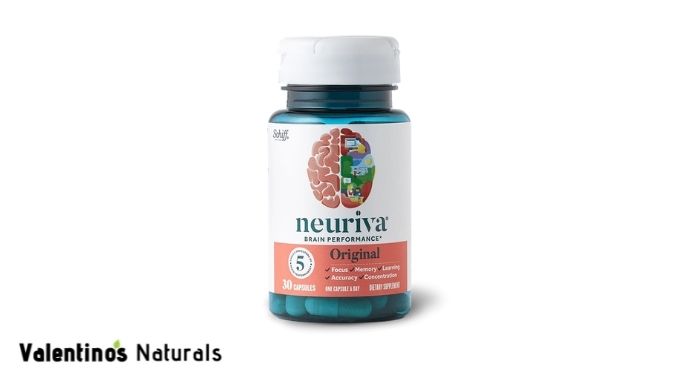
Schiff Vitamins makes Neuriva. Reckitt — the same company behind Lysol and Mucinex — bought Schiff in 2012 for $1.4 billion. That context matters. Neuriva isn’t a passion project from some guy who got into nootropics. It’s a line extension from a consumer packaged goods machine that knows how to build shelf presence and move units through drug stores.
The product line now has six SKUs: Original, Plus, Ultra, Gummies, De-Stress, and a few limited formats. Original retails at $32.99 for 30 capsules — $1.10 per dose. That price will come back later and it won’t look good.
Here’s what trips people up most. The packaging says “clinically tested ingredients.” That phrase is doing a lot of quiet work. It means the companies that supply the raw materials ran studies on those raw materials. It does not mean Schiff put Neuriva in a randomized controlled trial and watched people get smarter. The finished product has never been tested as a finished product. The “clinically tested” badge belongs to NeuroFactor (a branded coffee fruit extract from FutureCeuticals) and Sharp-PS Green (a branded phosphatidylserine from Enzymotec). Those suppliers did the testing. Schiff bought the ingredients and licensed the claims.
Technically defensible. Functionally misleading. If you bought a sandwich because the bread was “clinically tested,” you’d feel cheated when you bit into it.
The Two Ingredients Neuriva Original Relies On — and What the Research Actually Shows
Neuriva Original contains 100mg of NeuroFactor (Coffee Fruit Extract) and 100mg of Sharp-PS Green (Phosphatidylserine). That’s the whole formula. Everything Schiff is asking you to believe rests on those two numbers.
The Coffee Fruit Extract story is the one that bothers me most. The main study Neuriva points to was published in the British Journal of Nutrition in 2013. Twenty-six participants. Single dose. The finding: BDNF plasma levels went up roughly 143% over placebo after subjects took 100mg of NeuroFactor. That’s it. That’s the study.
BDNF is brain-derived neurotrophic factor, a protein tied to neuron health and plasticity. The marketing copy describes it in ways that make it sound like pouring Miracle-Gro on your neurons. But the actual finding is that a blood marker went up in 26 people after one dose. Two things the top Google results skip completely: BDNF going up in plasma doesn’t mean it crossed the blood-brain barrier and changed anything in the brain — that barrier is real and BDNF doesn’t pass it freely. And the study never connected the plasma increase to a cognitive outcome. Nobody scored better on a memory test. Nobody processed information faster. The mechanism is plausible. The jump from “BDNF went up in blood” to “you will think better” is not proven in this data. A 26-person, single-dose study from 2013 is a starting point, not a conclusion.
Phosphatidylserine has a better evidence base, I’ll give it that. There’s real research on PS for cognitive decline, especially in older adults, and the FDA allows a qualified health claim for it. But here’s the problem: the effective doses in that literature — particularly the dementia research — sit at 300mg per day. Three times what Neuriva gives you. Neuriva’s 100mg lands at the floor of the 100–300mg range studied. You’re not getting a full serving of the ingredient the studies used. You’re getting the minimum amount Schiff could put on the label and still technically point to the research.
That’s what underdosed looks like in practice. It’s not zero — it’s just not what the clinic used.
Neuriva Plus adds Vitamins B6 (1.7mg) and B12 (2.4mcg) to the same base. Both are RDA amounts, not therapeutic doses. If you eat anything close to a balanced diet, you’re already hitting those numbers. The Plus isn’t a meaningful upgrade.
Dosage Directions and the Timing Detail Most Users Get Wrong
The label says one capsule nightly, without food. Most people buying this at CVS don’t read that closely. I’ve seen probably forty reviews where someone says “I take it every morning with my coffee” and then reports no effect. Honestly, that’s not a coincidence.
The nighttime recommendation exists for a reason tied to phosphatidylserine. PS is thought to interact with cortisol regulation, and some researchers think it absorbs better when cortisol is naturally declining in the evening. PS has a half-life of around 12 hours, so a nighttime dose gives it time to work while you sleep. There’s also limited data suggesting caffeine may blunt PS absorption — which is a problem if you’re washing it down with your first coffee of the morning.
The nighttime instruction is counterintuitive for something marketed around focus and mental sharpness. Focus products feel like morning products. That’s the mental model people come in with, and Schiff’s own advertising does nothing to fix it. So the bottle says “take at night,” the ads imply “be sharper during your day,” and the average user splits the difference by taking it whenever they remember — usually morning, usually with coffee. That almost certainly cuts whatever modest effect exists.
The gummies are a slightly different story. Two gummies equal one serving, same 100mg PS as the capsule. But the gummy container holds 45 servings versus 30 capsules in the Original. More servings, different math on cost. I’ll get to that next.
Price Breakdown: What You Pay Per Ingredient vs Competitors
Let me just put the numbers next to each other because they’re embarrassing side by side.
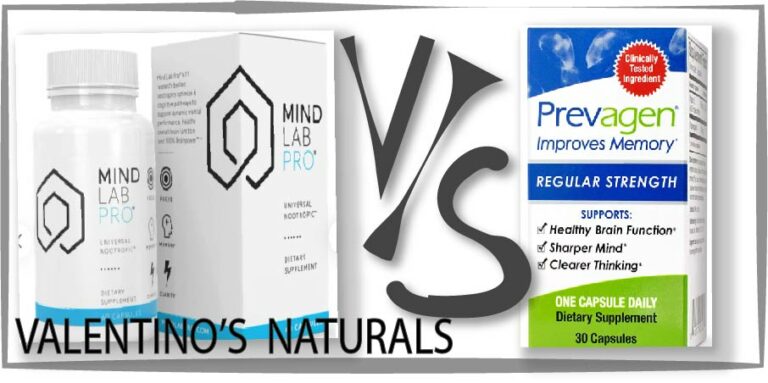
Neuriva Original: $32.99 for 30 capsules, $1.10 per dose, two active ingredients. Neuriva Ultra: $49.99 for 30 capsules, $1.67 per dose, four active ingredients. Mind Lab Pro: $69 for 60 capsules, $1.15 per dose, eleven active ingredients. NOW Foods Phosphatidylserine 100mg: $18.99 for 60 capsules on Amazon, $0.32 per dose for the exact same 100mg PS Neuriva gives you.
The NeuroFactor raw ingredient — the coffee fruit extract — costs roughly $0.15 to $0.25 per 100mg serving at wholesale. Add the PS cost, the capsule, the bottle. You’re looking at maybe $0.50 in raw materials per Neuriva Original dose. The rest of that $1.10 is brand, distribution, shelf space, and a cut of that $50 million ad spend.
Mind Lab Pro isn’t perfect and I’m not a paid ambassador for it. But at $1.15 per dose you get Citicoline, Lion’s Mane, Bacopa, PS, Rhodiola, Maritime Pine Bark, and more. The per-active-milligram math isn’t close. Neuriva Original charges near-parity pricing to a product with eleven ingredients. The only thing justifying it is brand recognition and the fact that Reckitt has enough muscle to put it eye-level at every Walgreens in America.
Buying Neuriva Original instead of a standalone PS product means paying a 243% premium for the second ingredient — NeuroFactor — which rests on a 26-person study. That’s the Neuriva tax. You’re paying it for the logo.
Real User Complaints That Don’t Show Up in Star Ratings
Neuriva Original has over 4,200 reviews on Amazon with a 4.1-star average. Sounds solid. But aggregate ratings hide a lot — satisfied customers who feel nothing negative don’t rush to write anything, while the people who got headaches absolutely do.
I went through 1-star and 2-star reviews in batches. The complaint profile is consistent enough to be a real signal. Headaches show up in roughly 8 to 10% of the negative reviews I sampled. That tracks with Coffee Fruit Extract carrying trace caffeine — around 1 to 3mg per 100mg serving. Small amount, but enough to affect people who are caffeine-sensitive, especially if they’re already drinking coffee and didn’t expect another caffeine source. The Neuriva marketing says nothing about caffeine content. Why would it.
Digestive upset comes up a lot too. PS taken without food causes nausea for some people. The label says take without food, which is correct for absorption but hard on your stomach if you’re sensitive. That’s a real tension in the dosing nobody explains clearly at the point of purchase.
The vivid dream reports from Neuriva Plus users are interesting. PS at night, possible cortisol interaction — some users report unusually vivid or disturbing dreams. It comes up enough that I don’t think it’s random. Might be the PS, might be the B vitamins taken at night, might be both. Not documented in the clinical literature at this dose, but the pattern in reviews is consistent.
The most important piece of public information about Neuriva isn’t on any of the top review sites I read. In December 2020, the FTC sent Schiff a warning letter about unsubstantiated brain health claims for Neuriva. The FTC’s position was that the advertising claims went beyond what the evidence supports. Schiff made modifications. That letter is public record, and the fact that almost no review site mentions it is a credibility failure on their part. If you’re writing an honest review of a brain supplement and you skip the part where the FTC told the company its claims were unsubstantiated, I don’t know what you think you’re doing.
Neuriva Gummies vs Capsules: The Ingredient Swap That Changes the Product
At first glance the gummies look like a lateral move. Same 100mg PS, similar price, just chewable. They’re not the same product.
The capsules use Sharp-PS Green — soy-derived phosphatidylserine from Enzymotec with its own research behind it. The gummies use PS from sunflower lecithin instead. Sunflower-derived PS isn’t bad, and it’s actually preferred by people avoiding soy, but it doesn’t have the same research history as the soy-derived Sharp-PS that most of the clinical literature used. The gummies quietly swapped the studied ingredient for a different one and kept the same claims.
There’s also a delivery problem. PS in a chewable gummy sits in a sugar and starch matrix — tapioca syrup, citric acid, 3g added sugar per two-gummy serving — that doesn’t behave the same way as PS in a gelatin capsule. Fat-soluble compounds like phosphatidylserine absorb better with dietary fat. A capsule taken with a small fat source gives PS a better environment than a fruit-flavored chew with tapioca syrup. The bioavailability difference hasn’t been studied head-to-head for this exact formulation, but the physics are straightforward.
The gummies do have one thing going for them over the Plus capsules: the B vitamin doses are actually higher. You get 15mg of B6 and 300mcg of B12 per gummy serving versus the RDA doses in the Plus capsule. That’s a real difference. Still not therapeutic in any serious sense, but at least they’re not just padding the label.
Gummies are $27.99 for 50 count — 25 servings at $1.12 per dose. A worse delivery form, a less-studied PS source, and you’re paying more per serving than the capsules while only getting 25 days instead of 30. The gummies are for people who genuinely can’t swallow capsules. If that’s you, fine. If you’re picking them because they taste like strawberry, you’re paying more for a worse supplement.
Side Effects: What Is Documented vs What Is Theoretical
The soy hormone concern follows Neuriva around on competitor review sites constantly. “PS is soy-derived, soy contains phytoestrogens, phytoestrogens disrupt hormones.” The chain sounds plausible until you look at the dose. At 100mg of soy-derived PS, the phytoestrogen content is negligible. There is no clinical evidence of hormonal effects at this dose. None. This gets repeated because it sounds serious and it steers people toward competitors who happen to use sunflower PS instead. It is not the concern the evidence points to.
The actual documented concern — one almost no review site mentions — is the anticoagulant interaction. Phosphatidylserine has mild blood-thinning properties, and the literature flags this at doses above 300mg per day. At 100mg it’s probably not clinically meaningful for most people. But if you’re on warfarin, aspirin therapy, or any anticoagulant, that’s the conversation to have with your doctor before starting PS. Not the soy hormone thing.
Coffee Fruit Extract runs about 1 to 3mg of caffeine per 100mg serving. That’s a fraction of an espresso shot (roughly 63mg). For most people, irrelevant. For people who are genuinely caffeine-sensitive, or who don’t realize they’re stacking another source on top of an already loaded day, it might explain the headache pattern I mentioned earlier.
GI upset from PS on an empty stomach is the most consistently documented side effect in both the literature and user reports. The label says take without food for absorption reasons. If your stomach pushes back on that, taking it with a small amount of fat — a few nuts, a spoonful of nut butter — is a reasonable workaround that probably doesn’t kill absorption much. I switched to that approach halfway through my own four-week run because the empty-stomach instruction was causing issues by day three.
No safety data exists for pregnancy or nursing. That’s not a theoretical risk, it’s an absence of data. The default position for any supplement with no safety data in that population is don’t use it.
What to Buy Instead — With Specific Thresholds
I’m not going to point you toward another proprietary blend as the alternative. That’s the lazy move most reviews make and it solves nothing — you end up with the same problem: opaque dosing and inflated prices for ingredients you can buy straight up on their own.
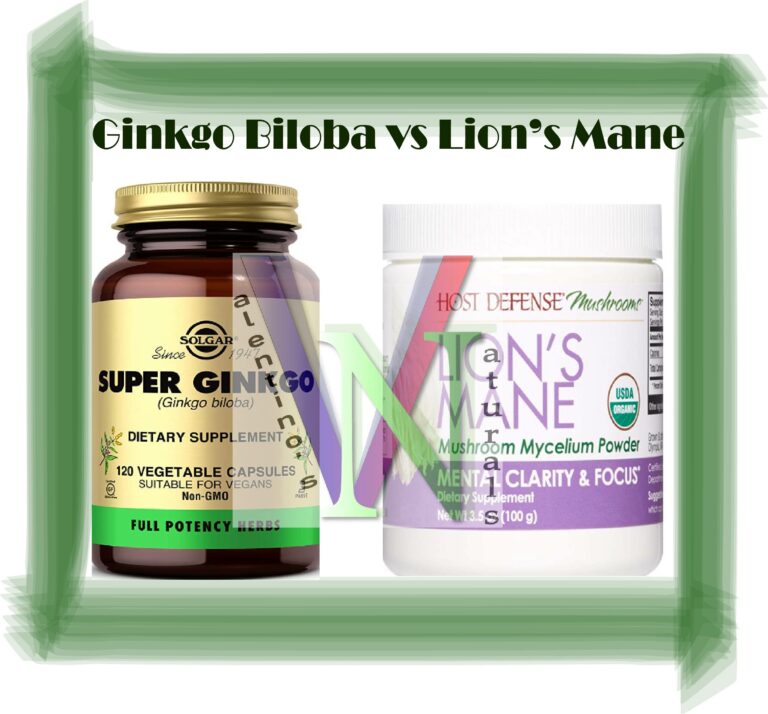
If your monthly supplement budget is under $30, skip Neuriva entirely. Jarrow PS-100 (soy-free option available) runs about $21.95 for 60 softgels. Host Defense Lion’s Mane, 60 capsules at 500mg per serving, is $29.95 — $0.50 per dose. Between those two you have a more complete stack: a well-dosed PS at a real cost per serving, and 500mg of Lion’s Mane, which has more interesting evidence for nerve growth factor support than NeuroFactor has for cognitive performance. Total monthly cost for both: roughly $25. And you can read exactly what’s in each capsule and compare it to the studies used — no proprietary blend hiding the numbers. Turns out that’s not a high bar, but a lot of products clear it anyway.
If you have $50–70 per month to spend, Mind Lab Pro is the honest recommendation. $69 for 60 capsules, 250mg Citicoline, 100mg PS, 500mg Lion’s Mane, 75mg Bacopa, Rhodiola, Maritime Pine Bark, and more. At $1.15 per dose you get eleven dosed ingredients, several with stronger research than NeuroFactor. I’ve run it for two separate four-week stretches. The effect is subtle and I’m appropriately skeptical about what was placebo. But the formula makes sense on paper in a way Neuriva’s doesn’t.
If what you specifically want is the Coffee Fruit Extract because you’ve read the BDNF research and found it interesting, NeuroFactor is available as a standalone from Naturo Sciences: $19.99 for 60 capsules at 100mg each. Buy the ingredient, not the Reckitt packaging around it.
There is one scenario where Neuriva is the right answer. You want a single capsule from a brand your doctor has heard of, sold at the CVS two blocks from your house, with no research effort on your part. That’s a real need and I don’t dismiss it. Neuriva serves that use case. It’s the hotel minibar of supplements — the product is fine, the convenience is real, and you’re paying roughly 300% over what the ingredients cost elsewhere because of where the shelf is. If that trade-off works for you, fine. But know that’s what you’re paying for.
What you’re not paying for, based on the evidence, is a clinically proven memory product. You’re paying for two ingredients — one with thin evidence and one that’s underdosed — wrapped in $50 million worth of brand confidence. The ingredients are in the bottle. Whether the dose matches what the research actually used is a different question, and now you know the answer.