As an Amazon Associate I earn from qualifying purchases. This post contains affiliate links. If you buy through them we may earn a commission at no extra cost to you.
Product prices and availability are accurate as of the date and time indicated and are subject to change. Any price and availability information displayed on Amazon at the time of purchase will apply to the purchase of this product. Certain content that appears on this site comes from Amazon. This content is provided "as is" and is subject to change or removal at any time.
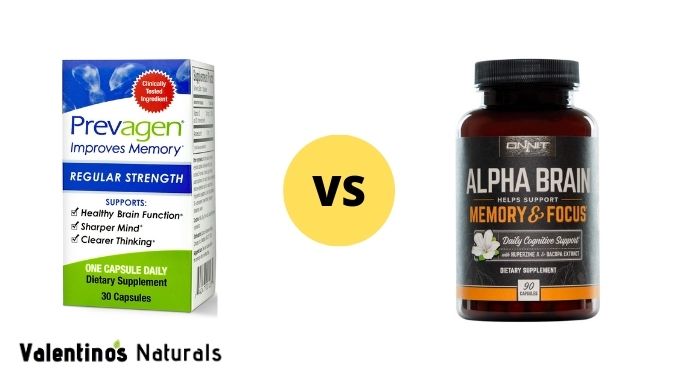
Prevagen vs Alpha Brain: Which to Choose?
Prevagen’s main ingredient is a protein derived from jellyfish. In 2012, the FDA warned Quincy Bioscience for making unsubstantiated drug claims about it. And it still outsells almost every nootropic on the shelf at CVS. That tells you more about supplement marketing than it does about memory.
I spent about $1,100 in a year buying nootropics before I sat down and made a spreadsheet of what I’d actually taken, at what dose, for how long, and what changed. Nothing I could name. That’s when I started reading labels against studies instead of against other labels. These two products are where I keep sending people back to zero, because the comparison itself is broken.
They Are Not Competing Products — Here Is the Actual Split
Prevagen is sold exclusively to people experiencing age-related memory decline. Their marketing targets adults 40–91. The mechanism is apoaequorin, a calcium-binding protein from Aequorea victoria jellyfish, and the theory is that calcium dysregulation contributes to neuron deterioration as you age. Prevagen Regular gives you 10mg apoaequorin per capsule. Prevagen Extra Strength bumps that to 20mg.
That’s the whole product. Quincy Bioscience was founded in 2004 and has spent nearly two decades building one product around one ingredient for one demographic.
Alpha Brain is something else entirely. Onnit launched it for healthy adults who want sharper focus and faster processing right now, not recovery from age-related decline. Different regulatory frame, different mechanism, different intended user. Calling these direct competitors is editorial laziness that does real damage.
It steers people in their mid-30s toward Prevagen because they’re stressed and forgetful at work. It steers people in their 60s toward Alpha Brain because it has more ingredients and sounds more sophisticated. Both of those are wrong purchases. “Memory supplement” and “nootropic” are not synonyms, and acting like they are is how you waste $70.
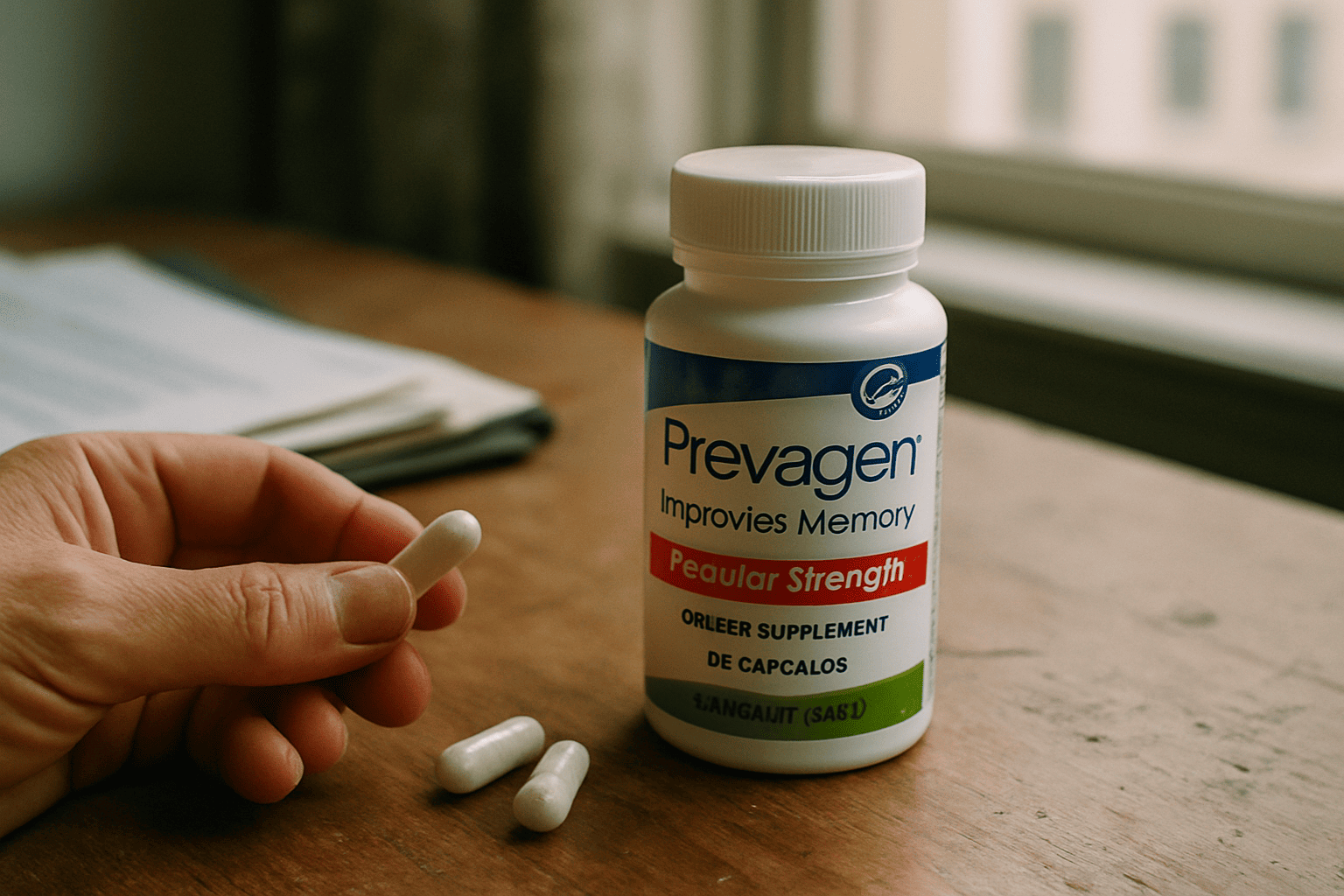
What Prevagen’s One Clinical Trial Actually Showed (and Who Paid for It)
Madison Memory Study. Published in Advances in Mind-Body Medicine, Vol. 30, 2016. 218 participants, 90-day trial. The primary endpoint failed. No statistically significant benefit on the main outcome measure.
What it did show, in a post-hoc subgroup analysis of roughly 25% of participants who had the lowest baseline cognitive scores, was some improvement on certain memory tasks. Post-hoc means they looked at the data after the fact, identified a group that responded, and reported that. Not a finding. A starting point for a new hypothesis. And Quincy Bioscience funded the whole thing themselves.
FTC filed suit against Quincy Bioscience in January 2017 over misleading advertising claims. Their position was that the evidence didn’t support what the marketing said. That case settled, Prevagen kept selling, and the shelves at your local drugstore still display the phrase “clinically tested” on the box. Technically true. Something happened in a lab. What it found is a different sentence entirely, and most reviews just don’t finish it.
| Prevagen | Alpha Brain | |
|---|---|---|
| Active | Apoaequorin 10mg (20mg Extra Strength) | Three proprietary blends |
| Doses disclosed | Yes | No — blends only |
| Blend sizes | — | Flow 650mg, Focus 240mg, Fuel 60mg |
| Cost per day | $1.33 regular, $2.00 Extra Strength | $1.78 |
Bottom line: Prevagen tells you what is in it. Alpha Brain does not, and its Focus Blend is too small to hold a studied dose of any one ingredient.
READ: My full Mind Lab Pro review
Alpha Brain’s Proprietary Blends: What You Can and Cannot Verify
Three proprietary blends: Onnit Flow Blend at 650mg total, Focus Blend at 240mg total, Fuel Blend at 60mg. Flow Blend includes L-tyrosine, L-theanine, oatstraw, and phosphatidylserine. Focus Blend is where Alpha-GPC and bacopa monnieri live, along with other ingredients. No individual doses are disclosed.
Here’s why that matters practically. Alpha-GPC has been studied for cognitive effect at 300 to 600mg. Yet the entire Focus Blend is 240mg, shared across every ingredient in it. Bacopa monnieri has a studied minimum effective dose of 300mg. So the Focus Blend doesn’t contain 300mg total, let alone 300mg of bacopa alone. The math doesn’t work, and the label doesn’t let you check.
Alpha Brain costs $79.95 for 90 capsules, a 30-serving bottle at two caps per serving. Black Label runs $99.95 for just 20 servings. Reviewers constantly list Alpha Brain’s ingredient roster as proof the product works, but ingredient lists prove nothing without the doses. Knowing bacopa is present and knowing bacopa is present at a dose that does anything are two completely different statements.
Proprietary blends aren’t a neutral industry standard. Every brand that uses them is telling you to trust the label without giving you the information to verify it.
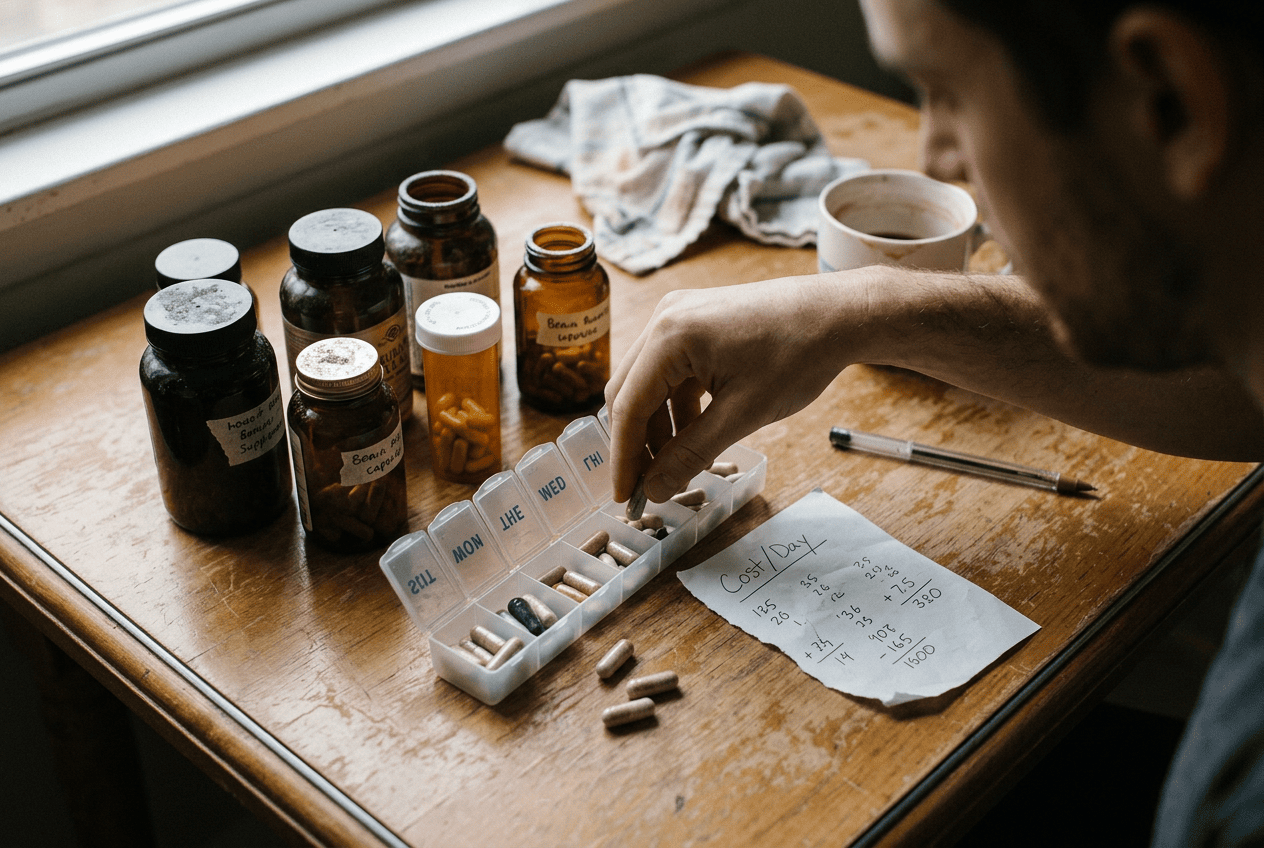
Price Per Day, Broken Down Without the Marketing Math
Prevagen Regular: $39.95 for 30 capsules, so $1.33 per day. Extra Strength: $59.95 for 30 capsules, $2.00 per day. Alpha Brain at $79.95 for 90 capsules works out to $1.78 per day. Onnit’s subscription takes 15% off, landing at $67.96 for 90 capsules, about $1.51 per day.
Now compare that to buying the individual ingredients. Phosphatidylserine at 100mg from NOW Foods runs around $0.25 per day. Bacopa at 300mg from Himalaya, a brand I’ve actually used for a consistent stretch, comes to roughly $0.20 per day. L-theanine at 200mg is about $0.10 per day from a dozen suppliers.
If Alpha Brain’s bacopa and Alpha-GPC are sitting at sub-therapeutic doses inside those blends, and the blend math strongly suggests they are, you’re paying $1.78 per day for a delivery mechanism wrapped around ingredients you could dose correctly yourself for under $0.50. Over 90 days that’s close to $115 extra for the uncertainty.
Side Effects That Show Up in Practice, Not Just on Warning Labels
Quincy Bioscience received 1,014 adverse event reports internally, per exhibits from the FTC complaint. Nausea, dizziness, worsening memory. Not reports from critics — they were in the company’s own records. Prevagen carries no disclosed allergen warnings, but apoaequorin comes from Aequorea victoria jellyfish, which is worth knowing if you have a shellfish sensitivity or any marine protein history.
Alpha Brain’s side effect conversation almost always skips the most important one. Huperzine A. Alpha Brain contains 400mcg per serving, and huperzine A has a half-life of approximately 10 to 14 hours. Take it every day and it accumulates. You’re not clearing yesterday’s dose before you add today’s. Vivid, sometimes disruptive dreams are the most commonly reported effect of that accumulation, and I’ve had them personally during stretches where I didn’t cycle off. Headaches from the choline precursor load show up too.
Onnit’s label says to take it daily. That instruction doesn’t account for huperzine’s pharmacokinetics at all. Most comparisons describe both products as “generally safe” and move on. Not wrong exactly, but they’re leaving out the part where daily huperzine A use can make the acetylcholinesterase inhibition effects compound in ways that are counterproductive rather than beneficial. Cycling it (five days on, two days off) is what the more careful literature suggests. Onnit doesn’t tell you that.
Dose used in the researchDose in the product
READ: Mind Lab Pro Dosage: When to Take It (and When Two Capsules Is Wrong)
Who Actually Benefits from Prevagen (Narrow and Specific)
Honestly. A narrow group. Adults over 40 who are experiencing persistent subjective memory complaints, and who have already ruled out the cheap and obvious explanations. Most people haven’t done that part.
Vitamin B12 deficiency affects roughly 6% of adults under 60 and about 20% of adults over 60 according to NHANES data. Deficiency causes real, measurable cognitive symptoms including memory problems. Getting your B12 tested is a single blood draw. Supplementing with 1000mcg methylcobalamin costs approximately $0.05 per day. A Prevagen Extra Strength 90-day supply runs about $120. If you haven’t checked your B12 before spending that money, you’ve done this backwards (I learned this the expensive way, for the record).
Sleep under seven hours impairs memory consolidation measurably within three days. Chronic stress degrades working memory through cortisol. Neither of those requires a supplement. People most likely to grab Prevagen off a CVS shelf are exactly the people most likely to be B12-borderline, sleeping six hours, and under sustained stress at work. Fixing any one of those will almost certainly outperform apoaequorin at a fraction of the cost. Quincy Bioscience’s target demographic deserves a deficiency panel before a $40 bottle.
The One Scenario Where Alpha Brain’s Formula Makes Sense
Actually, there is one piece of third-party evidence worth discussing here, and I want to be precise about what it shows and doesn’t show.
A study published in the Journal of the International Society of Sports Nutrition ran 63 healthy adults aged 18 to 35 through a six-week trial using two Alpha Brain capsules daily, matching the retail serving. Researchers found statistically significant improvement in verbal memory (p=0.04) and executive function compared to placebo. Small trial. Single study. But it wasn’t funded by Onnit, and the dose matched what you’d actually take. Genuinely more than Prevagen has produced.
Formula logic makes sense for a specific situation: acute cognitive performance under stress or mild sleep restriction, particularly for tasks demanding verbal recall and fast executive processing. L-theanine (100 to 200mg is the studied effective range, plausible within the 650mg Flow Blend even accounting for other ingredients), L-tyrosine, and phosphatidylserine together have decent supporting evidence for stress-state cognitive support.
Real but narrow. Not “I want to be smarter.” Closer to “I’m 28, I’ve got a high-stakes cognitive load this month, I’m sleeping a little short, and I want some acute support.” For that person, Alpha Brain has a real argument. For most people typing “Prevagen vs Alpha Brain” into Google, that profile doesn’t fit.
READ: How Long Does Mind Lab Pro Take to Work?
The Actual Decision Framework: Two Questions, Five Minutes
First question: are you over 40, experiencing persistent memory complaints, and have you already ruled out poor sleep, B12 deficiency, and chronic stress? If yes to all of that, Prevagen is the only product in this comparison with any age-specific data attached to it, weak as that data is. Go in knowing the primary trial endpoint failed and the only supportive finding came from a manufacturer-funded post-hoc analysis. A 90-day supply at Extra Strength costs about $120.
Second question: are you under 50, cognitively healthy, and looking for support during a high-demand acute performance period? The JISSN study profile fits here, and Alpha Brain’s blend, whatever its dosing imprecision, matched that trial. Your best honest case for the product.
If you’re neither of those people, buy the individual ingredients at doses the research actually used. Standalone Alpha-GPC at 300mg runs about $0.40 per day from Double Wood Supplements. Bacopa 300mg is around $0.20 per day. L-theanine at 200mg is about $0.10 per day. Combined that’s roughly $0.70 per day at known, studied doses, versus Alpha Brain’s $1.78 per day at unknown doses inside a proprietary blend. Custom stack wins on transparency, cost, and dosing accuracy simultaneously.
Framing this whole comparison as a binary choice assumes you must pick one or the other. You don’t. For most people, the correct answer is a third option that neither product wants you to consider.