
Short answer, folks: lion’s mane is the mushroom sold for focus, and reishi is the one sold for calm. Only lion’s mane has actually been tested on the thing it’s sold for, and even there the results in healthy adults are small. Reishi’s calm reputation comes mostly from tradition. The closest trial I could find tested it on fatigue in patients, not on stress, and Memorial Sloan Kettering lists insomnia among its possible side effects. So if calm is what you’re after, I wouldn’t start with reishi.
Last week I compared cordyceps with lion’s mane, and the question that kept landing in the comments was “okay, but what about reishi?” Fair enough. Reishi is the other half of almost every “focus by day, calm by night” mushroom bundle out there. So I read what I could find on it, put it in my notes next to lion’s mane, and brewed a box of it myself.
Quick and important: I’m not a doctor, and this isn’t medical advice. Supplements like these can interact with some medications, so if you take any prescription medicine, you’re pregnant or nursing, or you have a health condition or surgery coming up, talk to your doctor or pharmacist before you try either one. I’m also leaving amounts out on purpose. How much to take is a talk for your doctor, not a blog.
Here’s what I’ll walk you through (grab a coffee, it’s a long one):
- what each mushroom actually is, and why one ends up in a pan and the other in a pot
- what the lion’s mane trials found for focus
- the one reishi trial that comes closest to “calm,” and what it really measured
- the side effect on reishi’s list that surprised me
- the three lines to read on the label before you buy either
- whether taking both together makes sense
- what my own notes say
Lion’s Mane Goes in a Pan. Reishi Goes in a Pot.
Lion’s mane (Hericium erinaceus) is a food first. It’s a white, shaggy clump of soft spines that grows on hardwood trees, and people slice it and cook it like any other mushroom. Wikipedia sums up where things stand pretty well: it’s generally safe to eat, but its medicinal effects, its safety in supplements and its active compounds are unproven.
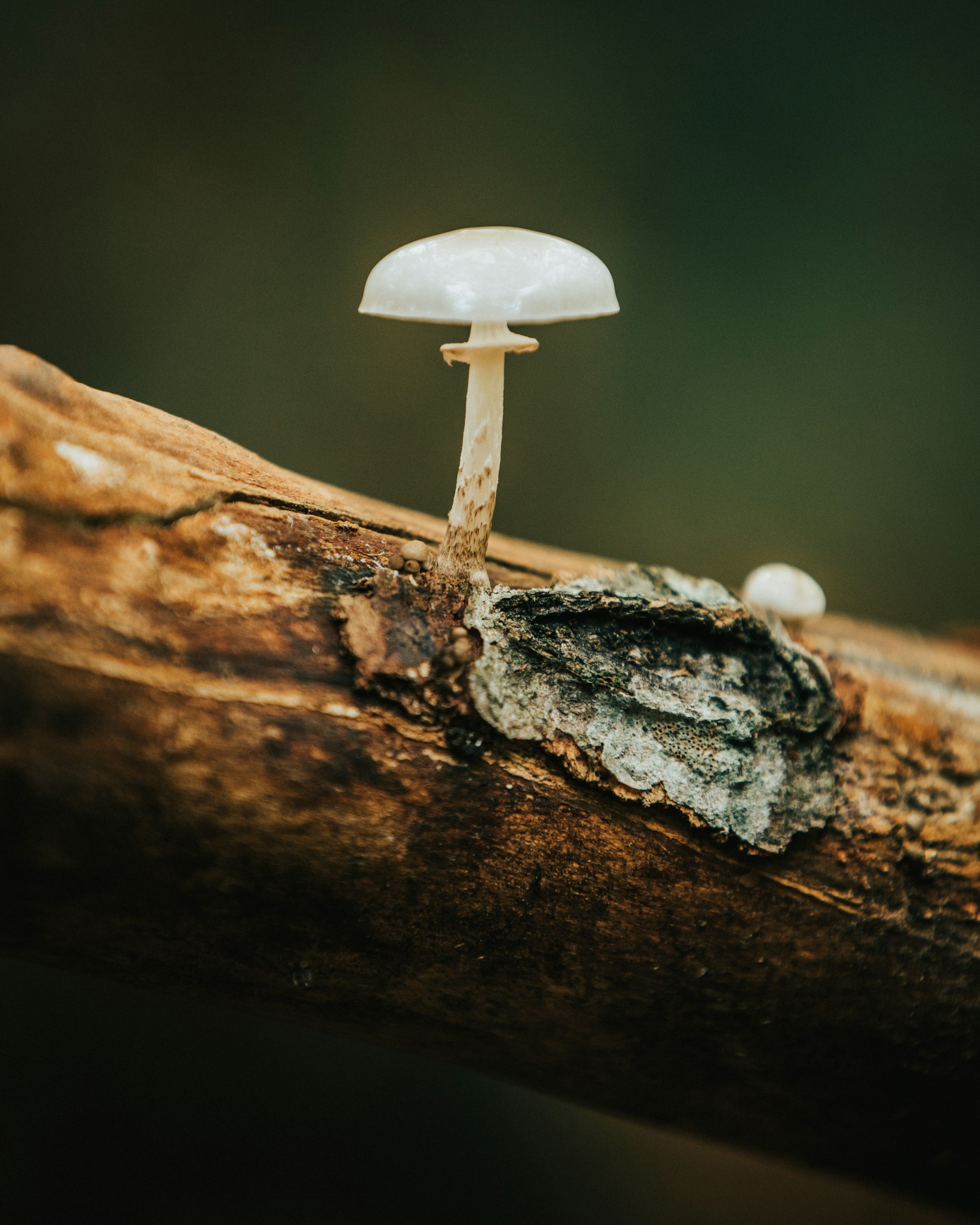
Reishi is a different animal. It’s a bracket fungus with a shiny, reddish-brown, fan-shaped cap that looks like somebody varnished it, and it grows at the base of hardwood trees, maples especially. Fresh, it’s corky. Dried, it’s basically wood. Nobody’s sautéing it.
It’s also bitter. That’s why it’s traditionally made into a hot-water extract. Sliced reishi goes into boiling water, simmers covered for about 2 hours, and comes out as a dark, bitter liquid. These days most reishi is farmed, and it has been since the early 1970s. It gets dried and ground, then sold as capsules or tea, or pressed into tablets.
That difference matters more than it sounds. With lion’s mane, you can cook the actual mushroom (it’s a gourmet specialty, right up there with shiitake and oyster mushrooms) and see if you even like it. With reishi you’re always buying a processed product, which puts a lot more weight on the label.

Why Lion’s Mane Wears the “Focus” Label

The focus story starts in the lab. Lion’s mane contains two families of compounds called hericenones and erinacines, and animal studies have tied them to brain function. A mouse isn’t a student cramming for finals, though. Here’s what happened in people.
The trial everybody cites came out of Japan in 2009. It took 30 adults aged 50 to 80 with mild cognitive impairment and split them into two groups of 15. The lion’s mane group pulled ahead of the placebo group on a thinking test by week 8 and stayed ahead through week 16. Four weeks after they stopped, their scores dropped again. The lead author worked in a mushroom company’s lab, which is worth knowing.
For healthy younger people it gets thinner. A 2023 pilot from Northumbria University gave lion’s mane to 41 adults aged 18 to 45. An hour after one serving they were quicker on a single test, the Stroop task. After 28 days there was a hint of lower stress that just missed statistical significance, and the authors themselves said to read it with caution.
Then a 2025 study of 18 adults aged 18 to 35 found no overall effect on thinking or mood 90 minutes after a serving. Only one pegboard test improved.
So lion’s mane has earned the word “focus” on paper. Barely. The effects in healthy adults are small, and they come from small trials.
READ: Lion’s Mane: What the Newest Trials Actually Found
Reishi’s “Calm” Label Has a Thinner Paper Trail
Here’s where it got interesting for me. I went looking for the trials behind reishi and calm, and I couldn’t find one in healthy adults that measured stress or anxiety. What I found instead was a very old reputation. In China it’s called lingzhi, and it’s been revered for over 2,000 years as a “mushroom of immortality.” That’s a lot of history. It isn’t a trial.
Now look at what Memorial Sloan Kettering’s herb database lists as reishi’s uses. People take it to boost the immune system and to lower cholesterol. The list also has strength and stamina, plus urinary symptoms in men. Calm isn’t on it. Sleep isn’t either (I checked twice).
The closest thing I could find is a 2005 study of 132 patients in China diagnosed with neurasthenia. That’s an old diagnosis built around long-lasting fatigue, and the WHO has since dropped it from its newest disease list. Half the patients got a reishi polysaccharide extract and half got a placebo, for 8 weeks.
It’s a decent result. Turns out reishi did something here. Of the 123 people who finished, 51.6% on reishi were rated as more than minimally improved, against 24.6% on placebo. Their fatigue scores fell 28.3% from where they started, against 20.1% on placebo. But read what was measured. That’s fatigue and general improvement in sick patients, from one extract, in one trial. It isn’t calm, and it isn’t you after a rough day at work.
The Side Effect That Surprised Me

Memorial Sloan Kettering lists three possible side effects for reishi. Nausea and liver injury are two of them. The third one is insomnia. Insomnia! On the mushroom half the internet sells as a bedtime drink.
I’m not saying reishi keeps people up at night. A side-effect list tells you what’s been reported, not how often it happens. But it does tell you that “calm” isn’t a settled fact. It’s also one more reason to watch how you actually sleep in your first weeks on it, instead of trusting how the bag says you’ll sleep.
MSK also tells people to talk with their healthcare providers before taking reishi, because herbal supplements are stronger than the herbs you cook with and can interact with some medications. And it flags reishi spore powder on its own: spores can raise a marker that shows up on some blood tests. If you take spores, tell your doctor before any bloodwork. If anything feels off after you start reishi, stop and call your doctor.
Side by Side, From My Notes
Put them next to each other and, honestly, the gap is kinda obvious. One is a food with a handful of small trials on thinking. The other is a bitter tea with a long history, one decent trial on fatigue in patients, and nothing I could find on calm in healthy people.
Keep that gap in mind the next time a bag promises “all-day focus” or “deep calm.” Those are marketing words, not results.
Three Lines to Read on the Label Before You Buy
The front of the bag sells you a feeling. The back tells you what you’re getting. These are the three lines I check first, every time.
- The Latin name. Lion’s mane should say Hericium erinaceus. Reishi is messier: shops sell 7 to 10 other Ganoderma species besides the main one, and the compounds vary a lot between them. The name you’ll often see, Ganoderma lucidum, was first given to a European species. The Asian mushroom turned out to be a different one, but the old name stuck.
- The part. Is it the fruiting body? The mycelium? Spores? They aren’t the same product, and spore powder is the one MSK flags for blood tests.
- The amounts. If it’s a proprietary blend that lists five mushrooms and one total, you can’t tell whether either one is underdosed, and neither can I.
If the label says “mycelium on brown rice” or “myceliated oats,” part of every scoop is grain. I went through that line in my cordyceps comparison, so I won’t repeat it here. And work out the cost per serving before you sign up for any subscription. A pretty box doesn’t change the math.
READ: Proprietary Blends: Why You Can’t Tell What’s In the Bottle
Should You Take Both?
A lot of products pair them: lion’s mane in the morning for focus, reishi at night to wind down. The mushroom coffee bags I read for my last post often throw both into one scoop, sometimes with four other mushrooms on top. I couldn’t find a single trial of the two taken together.
My rule is the same one I use for everything on this site. One thing at a time, four weeks minimum, same sleep and same coffee, notes every day. If you start both on the same Monday and feel better, you’ve got no idea which one did it. Or whether it was the extra hour of sleep you got because you were finally paying attention.
READ: Mushroom Coffee: What Is in the Bag and Is It Worth It
What My Own Notes Say

I wrote up my four weeks of lion’s mane in the cordyceps comparison: a fruiting-body powder in my morning coffee, and my notes say I felt about the same. It did nothing I could point to.
For reishi I bought a box of sliced fruiting-body tea myself and drank a cup after dinner most nights for four weeks. Honest report? It tastes like a bitter forest floor, and I needed honey to finish it. I slept about the same as I do on chamomile, which is to say about the same as I do on nothing at all.
That’s one guy, not a study. Your four weeks might look different. But my notes line up with what I read: small effects for lion’s mane in healthy people, and no real evidence yet that reishi calms anybody down.
Conclusion

Lion’s mane is the focus mushroom, with a few small trials behind it and modest results in healthy adults. Reishi is sold for calm, but its best trial measured fatigue in patients, calm isn’t on MSK’s list of its uses, and insomnia is on its list of side effects. If you want to try one, I’d start with lion’s mane, give it four weeks and keep notes. If calm is the goal, I’d look at sleep and caffeine before I bought a bitter tea. And talk to your doctor before either one, especially if you take any medication.
Got a reishi or lion’s mane label you want me to read? Drop it in the comments, I read every one. That would be it folks!