As an Amazon Associate I earn from qualifying purchases. This post contains affiliate links. If you buy through them we may earn a commission at no extra cost to you.
Product prices and availability are accurate as of the date and time indicated and are subject to change. Any price and availability information displayed on Amazon at the time of purchase will apply to the purchase of this product. Certain content that appears on this site comes from Amazon. This content is provided "as is" and is subject to change or removal at any time.
Short answer: Cognizin has the stronger evidence of the two, though that evidence is modest. Cognizin is a branded form of citicoline with a couple of decent human trials behind it (one of them with authors from the ingredient’s maker). Prevagen is a jellyfish-derived protein plus vitamin D, and in 2024 a federal jury found that none of its eight challenged memory claims were backed by competent and reliable scientific evidence.

I first compared these two back in 2021. A lot has happened since, mostly in a courtroom, so I went back through the court record, Prevagen’s current labels and the citicoline studies. Quick reminder, folks: I’m not a doctor. I read labels and research carefully and tell you what I find.
Here’s what I’ll cover:
- What’s in each Prevagen strength, and what it costs per day
- What the jury and the judge actually decided about Prevagen
- What Cognizin is, and what its studies found (and didn’t)
- Side effects and who should be careful
- Which one I’d spend money on
Prevagen in 2026: what’s in it and what it costs
Prevagen is made by Quincy Bioscience in Wisconsin. Every version has two active ingredients: apoaequorin, a protein originally discovered in jellyfish, and 50 mcg (2,000 IU) of vitamin D. The strengths differ only in the apoaequorin dose:
- Regular Strength: 10 mg apoaequorin, $39.95 for 30 capsules
- Extra Strength: 20 mg apoaequorin, $59.95 for 30 capsules
- Professional Formula: 40 mg apoaequorin, $89.95 for 30 capsules
Those are the prices on Prevagen’s own site in October 2026. The label says one capsule a day in the morning, with or without food, and “only one capsule per day.” All three contain milk and soy.
So per day, you’re paying about $1.33 for Regular, $2.00 for Extra Strength and $3.00 for Professional. You can compare that against anything else with my cost per serving calculator.
What the court decided about Prevagen
This is the part most Prevagen reviews skip, so here’s the plain version.
In January 2017, the Federal Trade Commission and the New York Attorney General sued Quincy Bioscience over Prevagen’s memory claims. The case finally went to trial years later. On March 11, 2024, the jury found that all eight challenged statements lacked “competent and reliable scientific evidence.” Those included “Prevagen improves memory,” “Prevagen is clinically shown to improve memory within 90 days” and “Prevagen reduces memory problems associated with aging.”
It was a split verdict on one point. The jury found only two of the eight statements (the ones about reducing memory problems with aging) to be materially misleading. Then on November 18, 2024, the court ordered Quincy to stop making all eight claims, and anything similar. On December 6, 2024, the court clarified that the order applies nationally, wherever Prevagen is marketed.
Quincy appealed. A three-judge panel of the Second Circuit heard arguments on February 26, 2026. The latest updates I could find don’t show a ruling yet.
The product page I read in October 2026 didn’t show the challenged memory claims. It calls Prevagen “a unique supplement for your brain.”
READ: Prevagen vs Alpha Brain
- January 9, 2017FTC and New York sueOver claims that Prevagen improves memory and is clinically shown to work.
- March 11, 2024Jury verdictAll eight claims lacked competent and reliable scientific evidence. Two were found materially misleading.
- November 18, 2024Court orderQuincy must stop making all eight claims and anything similar.
- December 6, 2024Applies nationwideWherever Prevagen is marketed.
- February 26, 2026Appeal arguedSecond Circuit panel heard Quincy's appeal. No ruling found yet.
FTC press release (2017), SupplySide Supplement Journal (2024), Truth in Advertising case timeline, Mintz/JD Supra (2026)
Apoaequorin: what it is, and the study behind it
Apoaequorin comes from a glowing jellyfish, and Prevagen’s site says it’s now produced “in a controlled scientific process.” The idea comes from lab studies, cited in the 2016 Madison paper, in which apoaequorin regulated calcium levels in nerve cells. That’s a lab-dish finding, not proof of what a capsule does in your head.

The main published human study is the Madison Memory Study, which appeared in 2016 in a journal called Advances in Mind-Body Medicine. It tested verbal learning in older adults. The jury still found the memory claims lacked competent and reliable scientific evidence.
My 2021 version of this post said some of the researchers had falsified data and that studies had been pulled from PubMed. I couldn’t find a source for that, so I’ve removed it. The jury verdict is a strong enough point on its own.
The vitamin D is a real nutrient, and 50 mcg is a solid dose if you’re low. But you don’t need a jellyfish protein to get it. If you want to know whether you even need it, my vitamin D calculator walks you through it.
Cognizin: branded citicoline, and what its studies show
Cognizin is a branded form of citicoline (also called CDP-choline), from Kyowa Hakko, a Japanese company that’s part of Kirin Holdings. Your body splits citicoline into choline and cytidine, and choline is what your brain uses to make acetylcholine, a chemical tied to memory and attention.

Here’s the research worth knowing:
- Healthy older adults (2021). In a 12-week trial published in the Journal of Nutrition, 100 healthy people aged 50 to 85 with age-associated memory impairment took 500 mg of Cognizin a day or a placebo. The citicoline group improved more than placebo on episodic memory and on a composite memory score. Those were secondary outcomes, and the authors included Kyowa Hakko staff.
- Teenage boys (published 2019, online since 2015). In a 28-day study of 75 healthy adolescent males, 51 took 250 or 500 mg of Cognizin and 24 took a placebo. The citicoline groups did better on attention and psychomotor speed.
- The skeptical view. In 2024, Europe’s food safety agency (EFSA) reviewed citicoline for a memory health claim. It found only one positive trial in healthy people (that 500 mg study), noted that a 1,000 mg study didn’t show the same benefit, and concluded a cause-and-effect relationship “has not been established.”
So Cognizin isn’t a miracle. It does have randomized trials in healthy people. One showed a memory benefit, and the other showed better attention and psychomotor speed in teenage boys. To be fair, neither product has an independent body endorsing its memory claim: EFSA said cause and effect “has not been established” for citicoline, and a jury found Prevagen’s claims unsupported. Cognizin’s edge is the trial data, not a regulator’s blessing.
READ: Citicoline Dosage: Is 250 mg Enough, or Do You Need 500?
- Regular Strength10 mg apoaequorin$39.95 for 30, about $1.33 a day
- Extra Strength20 mg apoaequorin$59.95 for 30, about $2.00 a day
- Professional Formula40 mg apoaequorin$89.95 for 30, about $3.00 a day
- Vitamin D (all three)50 mcg (2,000 IU)Half the 100 mcg adult upper limit
NIH Dietary Supplement Label Database; prevagen.com
Side effects and safety
Prevagen. From the label, the things to watch are the allergens (milk and soy) and the vitamin D. I didn’t find an independent safety review of apoaequorin itself. The adult upper limit for vitamin D is 100 mcg (4,000 IU) a day, and one capsule gives you 50 mcg. If you already take a vitamin D pill or a multivitamin, though, add them up.
Cognizin. In the 2021 trial, the researchers tracked side effects, blood pressure and blood tests, and concluded citicoline “may be safe” for regular use. That was a 12-week trial of healthy adults aged 50 to 85 (49 of them on citicoline), though, so it says nothing about longer use, medical conditions or medications.
For either one, if you take prescription medicine or have a medical condition, check with your doctor or pharmacist first. That goes double if your memory problems are new or getting worse. A supplement shouldn’t delay a real checkup.
| Prevagen | Cognizin | |
|---|---|---|
| What it is | Jellyfish-derived protein + vitamin D | Branded citicoline (choline source) |
| Dose sold or studied | 10 to 40 mg apoaequorin (sold strengths) | 250 to 500 mg a day in the positive trials |
| Main human study | Madison Memory Study (2016) | 12-week trial in 100 older adults (2021) |
| Independent finding on memory | Jury: claims not backed by reliable evidence | EFSA, on citicoline in general: 'has not been established' |
| Allergens | Milk and soy | Check the brand's label |
Bottom line: Cognizin has more supportive trial data. Neither has an independent endorsement for memory.
Which one I’d pick
Cognizin, if you want something for memory and focus. The evidence is modest but real.
Honestly, I’d go one step further and get it inside a fuller formula. My top pick, Mind Lab Pro, uses 250 mg of Cognizin alongside bacopa, lion’s mane and phosphatidylserine. To be clear, I found no trial that tested that exact combination, so that’s my judgment, not proven science. At $69 for 30 servings, it’s $2.30 a day. That’s only 30 cents more than the $2.00 a day Prevagen Extra Strength costs for one jellyfish protein and a vitamin.
If you only want plain Cognizin, standalone 250 mg capsules are easy to find:
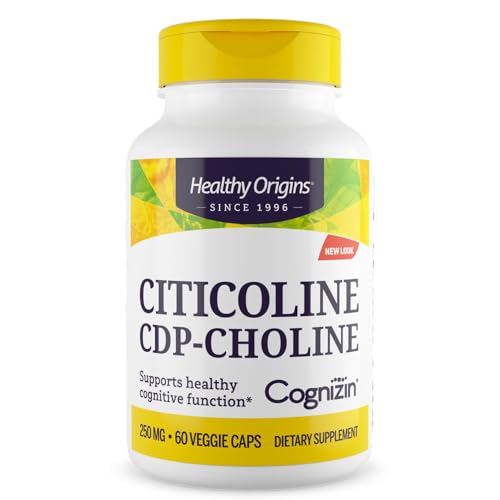
- Cognitive Support: Support your brainpower with choline-rich citicoline; this brain supplement supports healthy memory function and cognitive performance
- Citicoline Supplements: Experience the benefits of citicoline with Healthy Origins Cognizin; this memory supplement supports healthy cognitive function
- CDP Choline: Cognizin contains cytidine-5'-diphosphocholine, also known as CDP choline; this form of citicoline supports brain health and memory function
$21.99 In Stock
Paid link · price checked October 24, 2026 09:24
I wouldn’t buy Prevagen. My reason isn’t safety. It’s that a jury looked hard at the evidence for its memory claims and found it lacking.
READ: Citicoline as a Nootropic
Quick answers
Does Prevagen really work?
A federal jury found in 2024 that none of its eight challenged memory claims were supported by competent and reliable scientific evidence. That means the claims are unproven. It doesn’t prove the product does nothing. It means the company’s evidence for those claims didn’t meet that standard.
What are the ingredients in Prevagen?
Apoaequorin (10, 20 or 40 mg depending on strength) and 50 mcg of vitamin D. It also contains milk and soy.
What’s the difference between Prevagen Regular and Extra Strength?
Only the apoaequorin: 10 mg vs 20 mg. The vitamin D is the same.
Is Cognizin the same as citicoline?
Yes. Cognizin is Kyowa Hakko’s brand of citicoline. The trials above used Cognizin specifically.
How much citicoline should I take?
The Cognizin trials above used 250 to 500 mg a day. A study using 1,000 mg a day didn’t show the same memory benefit, so more isn’t obviously better. Check with your doctor if you take medication.
Conclusion
Prevagen vs Cognizin comes down to evidence. Cognizin has randomized trials in healthy people and a plain “has not been established” from EFSA, Europe’s food safety agency. Prevagen has a jury verdict and a nationwide court order against its memory claims, with an appeal still pending as far as I can tell. Cognizin has the stronger evidence of the two, and you can get it on its own or inside a fuller formula like Mind Lab Pro. See my top 3 nootropics for 2026 if you want the full picture.
That would be it folks! If you’ve tried either one, tell me in the comments what you noticed after a month.